Mechanical Manufacturing Machinery for Better Production
Summary
Mechanical manufacturing machinery enables factories to increase production speed, improve part accuracy, and reduce manual labor. This post covers the types, benefits, and real-world impact of modern mechanical equipment on industrial output.
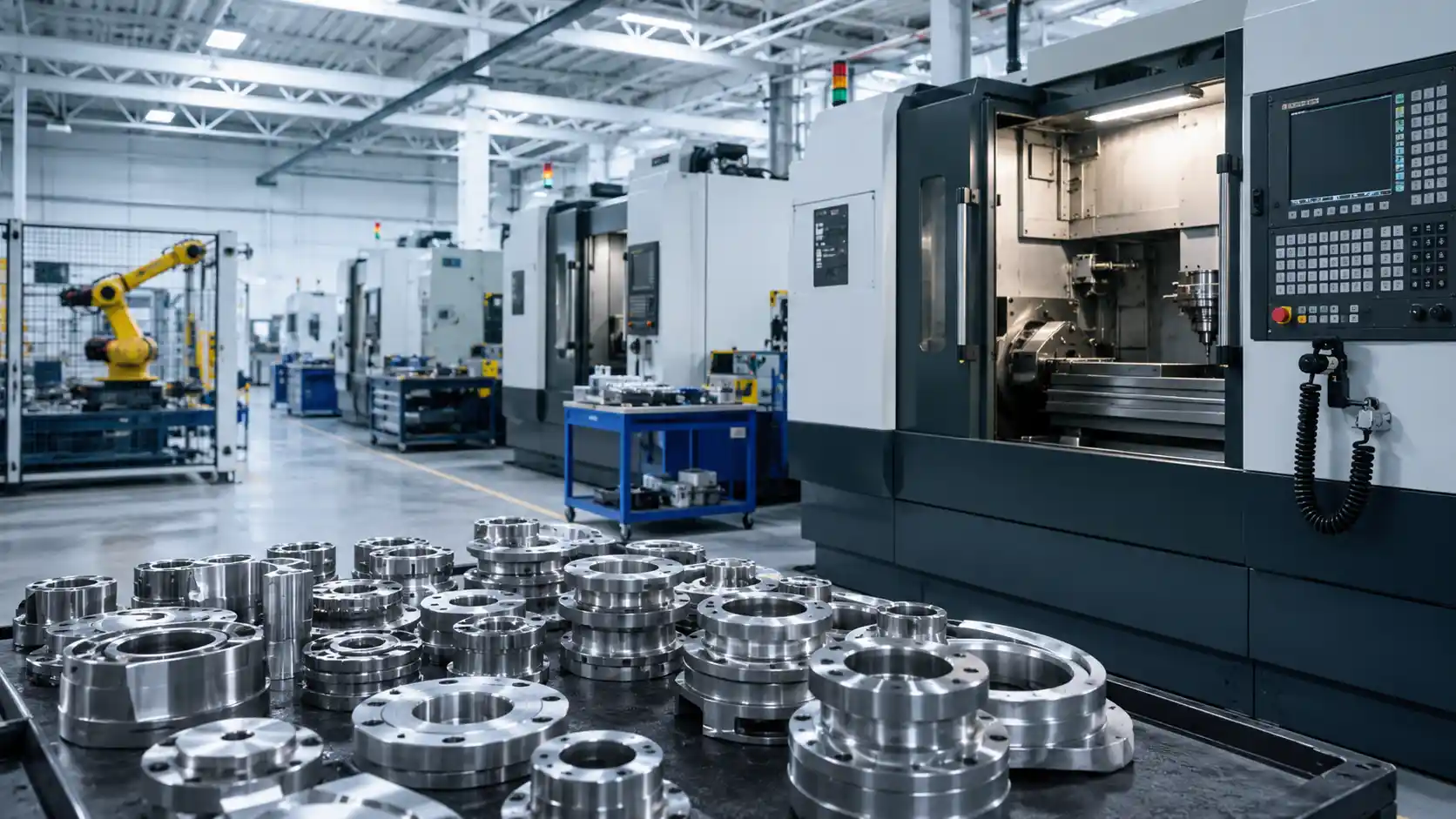
Mechanical manufacturing machinery is the driving force behind every high-output factory. These power-driven systems handle the cutting, shaping, forming, and assembling of raw materials at speeds and accuracy levels that manual labor simply cannot match. Whether a factory produces automotive parts, steel structures, or consumer electronics, the machinery on the production floor determines how fast, how precise, and how cost-effective the entire operation runs.
What Is Mechanical Manufacturing Machinery?
Mechanical manufacturing machinery refers to power-driven industrial systems designed to perform specific production tasks such as cutting, drilling, pressing, bending, grinding, welding, and molding. These machines use mechanical force, hydraulic pressure, pneumatic power, or electrical energy to convert raw materials into finished or semi-finished products.
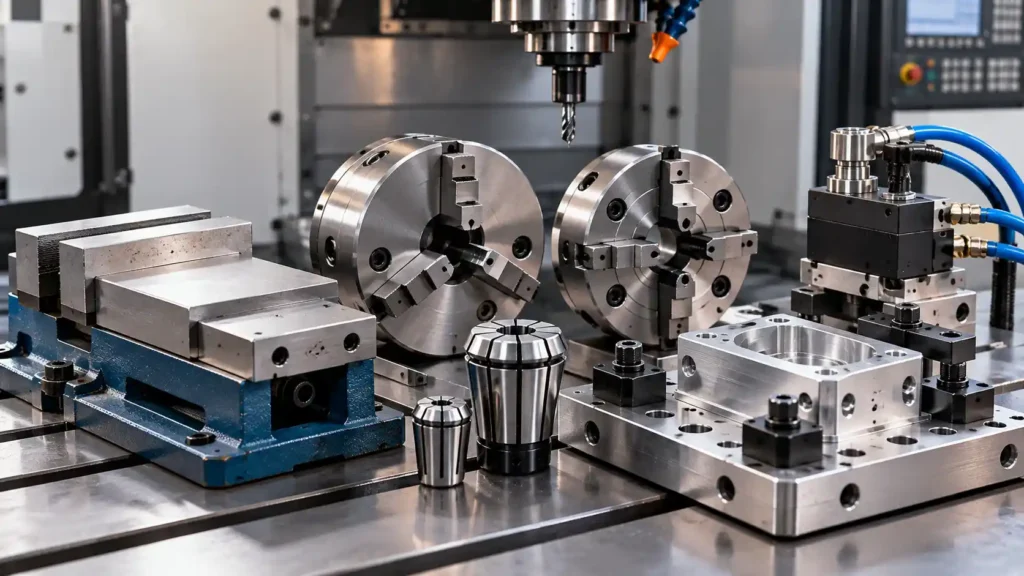
The category covers a wide range of equipment. CNC milling machines, hydraulic presses, lathe machines, injection molding systems, and industrial conveyors all fall under this umbrella. What makes them “manufacturing machinery” is their purpose: automating and accelerating production processes that would otherwise require significant manual effort.
Modern mechanical machinery also integrates digital controls. PLC (Programmable Logic Controller) systems and CNC (Computer Numerical Control) technology allow operators to program exact specifications, ensuring each unit produced meets the same dimensional and quality standards. This combination of mechanical power and digital precision is what separates today’s production equipment from traditional workshop tools.
Types of Mechanical Machinery Used in Manufacturing
Different production requirements call for different types of mechanical machinery. A factory producing precision automotive components will need CNC lathes and milling centers, while a sheet metal fabrication shop relies on hydraulic presses and shearing machines. Understanding the core machine categories helps manufacturers match the right equipment to their production goals.
The table below breaks down the most common types of mechanical manufacturing machinery, their primary functions, and the industries that use them.
| Machinery Type | Key Functions | Primary Industries |
| CNC Milling Machines | Multi-axis cutting, surface finishing, complex contouring | Aerospace, automotive, medical devices |
| CNC Lathe / Turning Centers | Cylindrical shaping, thread cutting, boring, facing | Shafts, bolts, camshafts, transmission parts |
| Hydraulic Press Machines | Stamping, deep drawing, metal forming, compacting | Automotive panels, appliance parts, metal sheets |
| Injection Molding Machines | Plastic part production, rapid cycle molding | Consumer products, packaging, electronics |
| CNC Drilling Machines | Precision hole-making, tapping, reaming | Construction, shipbuilding, mold making |
| Grinding Machines | Surface finishing, precision sizing, deburring | Tool making, bearings, gears |
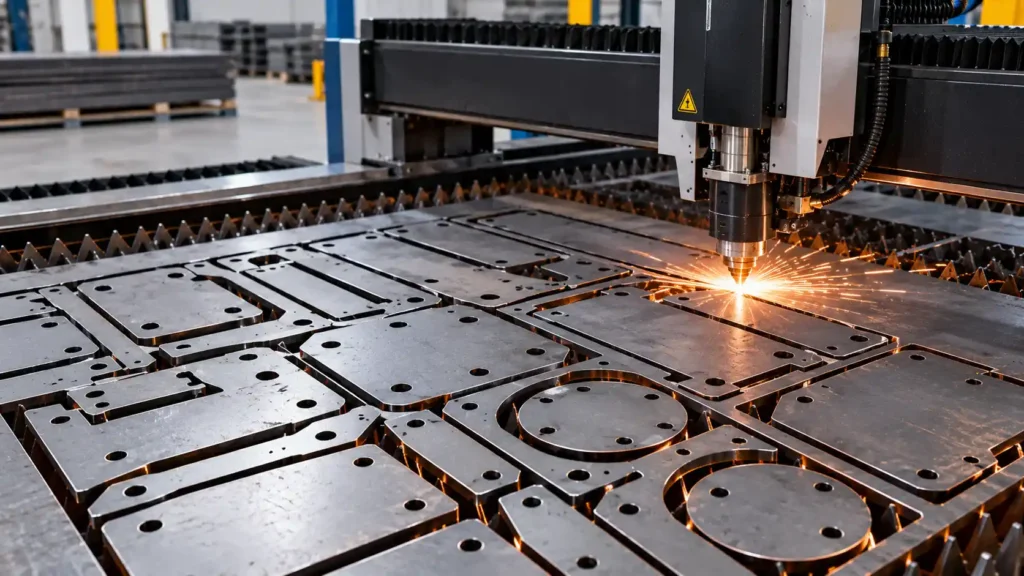
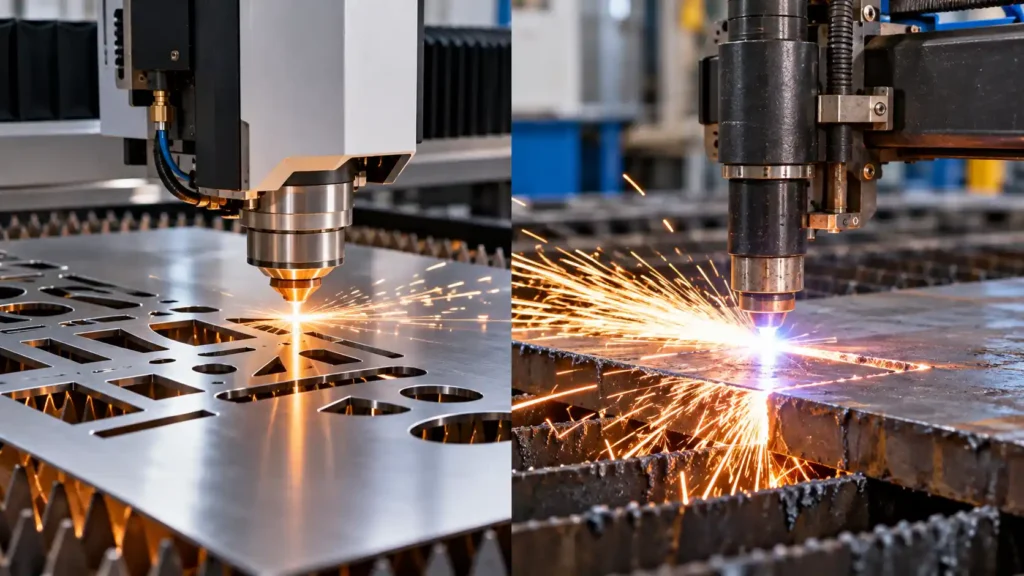
| Laser Cutting Machines | Sheet metal cutting, engraving, complex profiles | Signage, metal fabrication, electronics |
| Press Brake Machines | Sheet metal bending, folding, forming | HVAC ducting, structural steel, enclosures |
Each machine type serves a specific function within the production line. Factories that combine multiple machine types into integrated workflows achieve the highest throughput and flexibility. For example, a metal fabrication facility might use laser cutters for profiling, press brakes for bending, and CNC drilling machines for final hole placement, all in a single production sequence.
How Mechanical Machinery Improves Production Efficiency
The core advantage of mechanical manufacturing machinery is measurable improvement in production efficiency. This is not a vague benefit. It shows up in specific metrics: units produced per hour, defect rates, labor costs per unit, material waste percentages, and equipment uptime.
Here is how automated mechanical machinery compares to manual production across key performance indicators:
| Metric | Manual Production | Automated (Mechanical Machinery) |
| Production Speed | 30 to 60 units/hour | 200 to 500+ units/hour |
| Part Accuracy | +/- 1mm tolerance | +/- 0.01mm tolerance (CNC) |
| Defect Rate | 5 to 10% average | Below 1% with automation |
| Labor Dependency | High (operator per machine) | Low (1 operator, multiple machines) |
| Downtime | Frequent (reactive maintenance) | Minimal (predictive maintenance) |
| Scalability | Linear (add workers) | Exponential (add shifts, not labor) |
The efficiency gains come from three core areas. First, cycle time reduction. Automated CNC machines and hydraulic presses complete operations in seconds that would take a manual operator several minutes. Second, consistency. Every part produced by a properly calibrated machine meets the same specifications, which eliminates rework and scrap. Third, labor optimization. One trained operator can manage multiple CNC stations simultaneously, reducing the per-unit labor cost significantly.
The industry standard for measuring equipment performance is Overall Equipment Effectiveness, commonly known as OEE. It is calculated by multiplying three factors: Availability (uptime vs. planned production time), Performance (actual speed vs. maximum speed), and Quality (good parts vs. total parts produced).
OEE Benchmarks for Manufacturing Machinery
OEE gives factory managers a single number that captures how effectively their equipment is running. A score of 100% means the machine ran for all scheduled time, at maximum speed, producing zero defects. That is theoretically perfect but practically unachievable. The real value of OEE is tracking where losses happen and targeting improvements.
| OEE Tier | Score Range | Typical Breakdown | What It Means |
| World-Class | 85%+ | 90% Avail / 95% Perf / 99% Quality | Top-tier factories with lean systems |
| Good | 70% to 84% | Balanced scores across all three | Room for targeted improvements |
| Average | 55% to 69% | Mixed performance gaps | Significant optimization needed |
| Low | Below 55% | Major gaps in one or more areas | Urgent equipment or process overhaul |
Factories that invest in high-quality mechanical machinery with reliable components, proper maintenance schedules, and digital monitoring tend to score in the “Good” to “World-Class” range. Cheap or outdated equipment, on the other hand, drives OEE scores down through frequent breakdowns, slow cycle times, and higher defect rates.
Key Industries That Rely on Mechanical Manufacturing Machinery
Mechanical manufacturing machinery is not limited to one sector. Nearly every industry that produces physical goods depends on some form of mechanical production equipment. Here are the sectors with the heaviest reliance on these systems:
Automotive: CNC lathes produce crankshafts, camshafts, and transmission components. Hydraulic presses stamp body panels and structural parts. Robotic welding arms assemble frames and chassis.
Aerospace: 5-axis CNC milling centers create turbine blades, engine housings, and structural brackets with micron-level tolerances. Grinding machines finish landing gear components.
Food and Beverage: Stainless steel conveyors, filling machines, and automated packaging lines handle high-volume processing under strict hygiene standards. PLC-controlled systems manage temperature, pressure, and flow rates.
Textile: High-speed weaving, spinning, and finishing machines process fabric at scale. Energy-efficient motors reduce operating costs while maintaining consistent fabric quality.
Construction and Infrastructure: Metal shearing and bending machines fabricate structural steel. Heavy-duty presses form reinforcement bars and connection plates. Concrete batching systems mix and deliver materials on-site.
Oil, Gas, and Energy: Specialized machinery handles pipe threading, valve manufacturing, and pressure vessel fabrication. Explosion-proof certifications and corrosion-resistant materials are standard requirements.
How to Choose the Right Mechanical Machinery for Your Factory
Selecting the right mechanical machinery is a decision that affects production capacity, product quality, and operational costs for years. Buying based on price alone is a common mistake that leads to frequent breakdowns, poor part quality, and higher long-term expenses. Here are the key factors to evaluate before placing an order:
Production Volume: Match the machine’s rated output to your actual production targets. Oversizing wastes capital. Undersizing creates bottlenecks.
Material Compatibility: Metals, plastics, composites, and ceramics each require different machine rigidity, spindle speeds, and tooling. Verify that the machine handles your specific materials.
Tolerance Requirements: If your products demand tight tolerances (below +/- 0.05mm), you need CNC-grade equipment with precision ball screws and linear guides. General fabrication work may not require that level of accuracy.
Floor Space and Layout: Measure the available space and plan the material flow path. The machine should fit without blocking access for loading, unloading, or maintenance.
Energy Consumption: Compare the power ratings of similar machines. A hydraulic press that draws 30% less power at the same tonnage will save significant costs over its lifespan.
Maintenance and Spare Parts: Check that spare parts are available internationally and that the manufacturer provides technical support. Machines from obscure suppliers without a parts network can cause extended downtime when something breaks.
Certifications: Verify that the machine carries relevant certifications such as ISO 9001, CE marking, or UL listings. These certifications confirm that the equipment meets international safety and quality standards.
Working with a supplier that handles technical vetting, factory inspections, and specification verification simplifies this process significantly. Mekantra Technologies, for example, follows a structured 3-step procurement model: clients share their requirements, the team sources and quotes directly from vetted factories, and every machine is physically inspected before shipping.
The Role of Automation and Smart Technology in Modern Machinery
The gap between traditional mechanical machinery and modern production equipment is defined by one word: intelligence. Today’s mechanical manufacturing machinery does not just run. It monitors, adjusts, and reports.
PLC control systems allow operators to program complex sequences, set parameters, and switch between production profiles without manual reconfiguration. IoT-enabled sensors track vibration, temperature, and pressure in real time, flagging anomalies before they cause failures. This approach, known as predictive maintenance, reduces unplanned downtime by catching problems early.
AI-driven quality inspection systems use cameras and machine learning algorithms to detect surface defects, dimensional deviations, and assembly errors at production speed. These systems catch issues that human inspectors would miss, especially on high-speed lines producing hundreds of units per minute.
Industry 4.0 integration also enables remote monitoring. Factory managers can track machine status, production rates, and energy consumption from any location through cloud-connected dashboards. This level of visibility supports faster decision-making and more efficient resource allocation across multiple production sites.
Conclusion
Mechanical manufacturing machinery is the backbone of modern production. It delivers the speed, precision, and cost efficiency that manual processes cannot achieve at scale. From CNC milling centers and hydraulic presses to laser cutters and automated conveyors, each machine type plays a specific role in transforming raw materials into finished products.
However, the machinery is only as good as the supplier behind it. Choosing the wrong equipment or sourcing from unverified manufacturers leads to quality issues, downtime, and wasted capital. That is why working with a trusted industrial machinery partner matters. Mekantra Technologies specializes in sourcing high-performance mechanical manufacturing machinery from vetted global factories. With direct factory access, rigorous quality inspections, and end-to-end logistics support, Mekantra ensures that every machine delivered meets exact technical specifications and international compliance standards. To discuss your production requirements, request a quote today.

Mekantra Engineering Team
The technical voice of Mekantra. Our team consists of sourcing specialists, mechanical engineers, and logistics experts dedicated to providing transparent insights and high-performance solutions for the global manufacturing sector.
Mekantra Engineering Team
The technical voice of Mekantra. Our team consists of sourcing specialists, mechanical engineers, and logistics experts dedicated to providing transparent insights and high-performance solutions for the global manufacturing sector.