Slitting vs Cut to Length: Steel Processing Guide
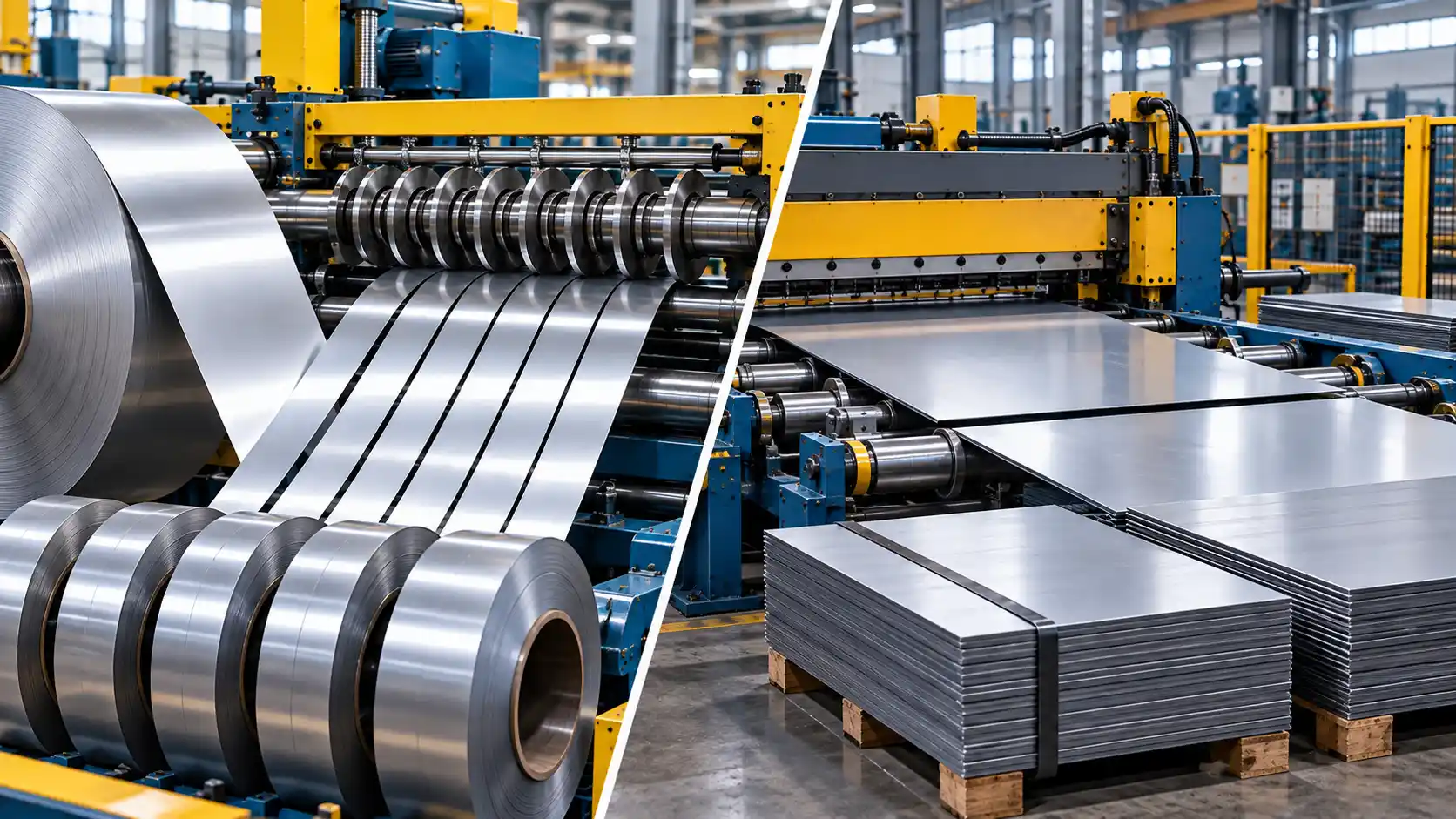
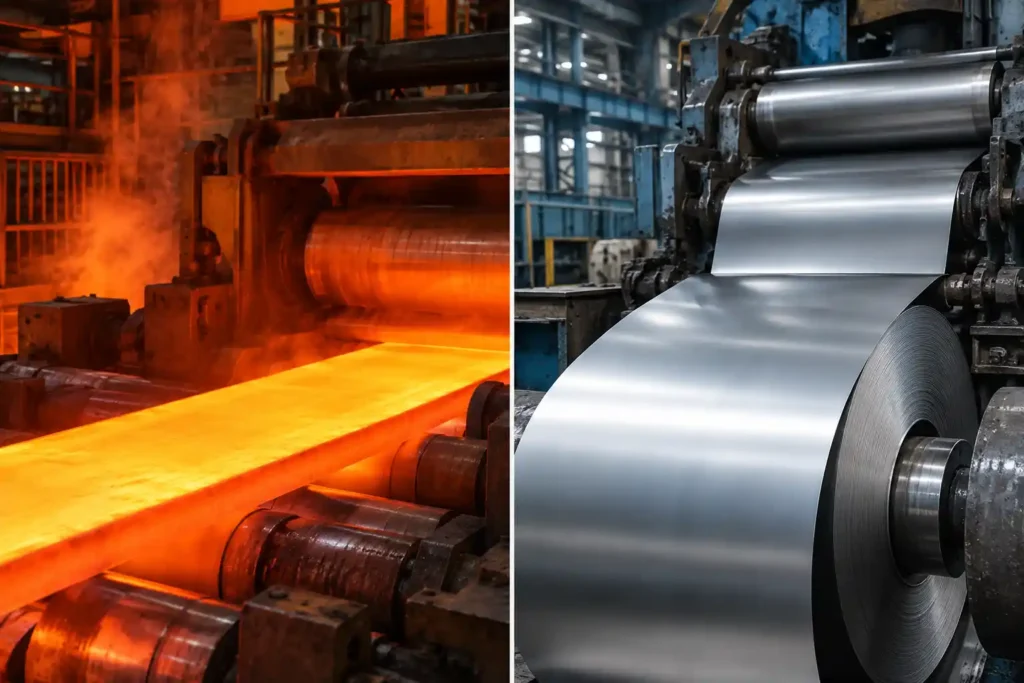
When manufacturers purchase raw steel from a mill, it almost always arrives in the form of a massive master coil. Weighing upwards of 20 to 30 tons, these master coils are far too large and unwieldy for direct manufacturing. Before this metal can become car doors, roofing panels, or household appliances, it must pass through specialized steel coil processing equipment.
Two of the most critical and distinct coil processing methods used to break down these master coils are slitting and cut-to-length processing.
For fabricators and steel service centers looking to optimize their operations with machinery from Mekantra Technologies, understanding the exact mechanical, operational, and financial differences between these two methods is vital. This comprehensive guide breaks down slitting vs cut to length, examining the equipment, the processes, the tolerances, and the final products.
What is Steel Coil Slitting?
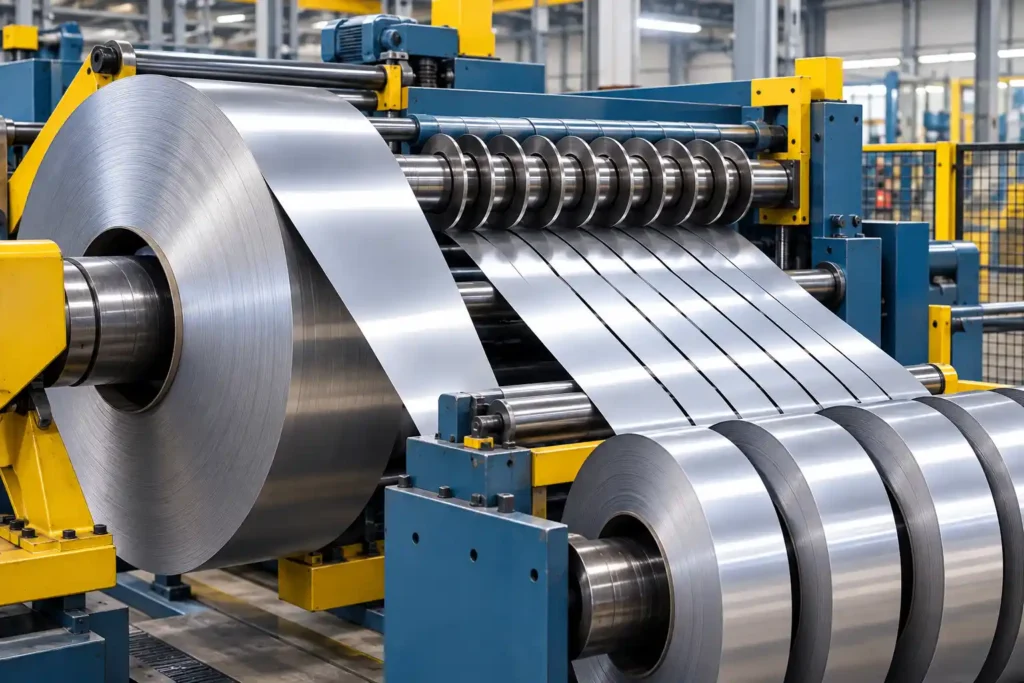
Steel coil slitting is a manufacturing process that takes a wide master coil and cuts it lengthwise (longitudinally) into multiple narrower coils. These narrower coils are frequently referred to as “mults” or slit strips.
The primary goal of a slitting line is to reduce the width of the material without changing its overall length. The process is continuous. Once the metal is threaded through the machine, it runs without stopping until the entire master coil is processed. Slitting is a high-speed, high-precision operation that relies on circular rotary knives to shear the metal cleanly as it passes through the machine.
What is Cut-to-Length (CTL) Processing?
Unlike slitting, which alters the width of the steel, a cut to length line is designed to change the length of the material. This process unrolls a master coil, flattens it to remove stresses and deformations, and cuts it widthwise (transversely) to create flat, rectangular sheets or plates.
The coil to sheet process is highly dependent on the thickness of the material. For thin materials, this is often called sheet metal processing. For thicker, heavier gauge materials, it requires robust steel plate processing equipment. The main objective of a CTL line is to produce perfectly flat blanks with exact dimensional lengths, ready for downstream manufacturing processes like laser cutting, press braking, or stamping.
The Core Difference: Longitudinal vs Transverse Cutting
To truly understand coil slitting vs cut to length, you must look at the geometry of the cut.
- Longitudinal Cutting (Slitting): The metal is cut parallel to the direction of the metal grain and the direction the metal is unrolling. The knives are stationary on a rotating arbor, and the metal is pulled continuously through them.
- Transverse Cutting (Cut-to-Length): The metal is cut perpendicular to the direction it is unrolling. The metal is fed to a specific length, stops (or is tracked by a flying shear), and a guillotine-style or rotary blade slices across the entire width of the strip.
Step-by-Step Coil Processing Methods
Both of these steel processing lines share some similarities at the beginning of the line, but they diverge dramatically in the middle and end stages. Here is a detailed breakdown of the machinery and steps involved.
1. Decoiling (Uncoiling)
Every steel coil cutting process begins with a decoiler, also known as an uncoiler. The heavy master coil is loaded onto a primary mandrel using a coil car.
- In both slitting and CTL lines, the decoiler holds the master coil securely and regulates the speed at which the metal feeds into the line.
- Back-tension is applied at the decoiler to prevent the heavy coil from unspooling too quickly, which would cause the material to tangle, scratch, or crease.
2. Leveling and Flattening
Metal has a memory. Because it has been wrapped tightly in a coil for months, it develops defects like “coil set” (a longitudinal curve) or “crossbow” (a transverse curve).
- In a Slitting Line: Leveling is usually minimal. The primary goal is simply to flatten the strip enough so it feeds evenly into the slitter knives. Extensive leveling is not required because the material will be recoiled tightly at the end of the line anyway.
- In a Cut-to-Length Line: Leveling is the absolute most critical step. If you are producing flat sheets, they must be perfectly flat. CTL lines use sophisticated precision levelers with multiple staggered work rolls and backup flights. By bending the metal back and forth past its yield point, the leveler erases the material’s memory, ensuring the final sheet will not warp when laser cut or stamped later on.
3. The Cutting Systems
This is where the steel processing line equipment differs completely.
- Slitting Machines: The heart of the line is the slitter head. It features two parallel arbors (top and bottom) fitted with circular rotary knives. Operators insert rubber stripper rings between the knives to push the slit material off the blades and prevent damage. Clearances between the top and bottom knives must be set to microscopic tolerances based on the steel’s thickness and tensile strength to minimize edge burrs.
- CTL Shearing Machines: Cut-to-length lines use shears to perform the transverse cut.
- Stationary Shears: The material feeds to a stop, the shear drops and cuts, and the material feeds again. (Commonly used for thicker steel plate processing).
- Flying Shears: The shear physically moves down the line at the exact speed of the moving metal, cuts it, and returns to its home position. This allows for continuous, non-stop feeding.
- Rotary Shears: Two synchronized spinning drums with blades attached cut the metal as it flows through. (Typically used for high-speed, light-gauge sheet metal).
4. The Exit Stage: Recoiling vs Stacking
- Recoiling (Slitting): After the metal is slit into narrow strips, it must be wound back up. The strips pass through a looping pit (to account for the fact that the center of a master coil is thicker than the edges, causing the strips to spool at different rates) and into a tension stand. The tension stand pulls the strips tight as they are wound onto a recoiler mandrel.
- Stacking (Cut-to-Length): Flat sheets cannot be recoiled. CTL lines end with automated stacking systems. Drop stackers, bomb-door stackers, or magnetic stackers carefully drop the cut sheets onto a pallet, creating a neat, perfectly aligned stack of flat metal blanks ready for shipping.
Final Product Differences: Narrow Coils vs Flat Sheets
The easiest way to remember the difference between slitting vs cut to length is to look at the final product that comes off the end of the line.
- Slitting Line Output: The output is “narrow coils.” If you input a 60-inch wide master coil, you might output five 12-inch wide coils. The length of the steel remains the same (perhaps several thousand feet long), but the width is changed.
- Cut-to-Length Output: The output is “flat sheets.” If you input a 60-inch wide master coil, you output flat plates that are 60 inches wide and, for example, 120 inches long. The width stays the same, but the length is changed, and the coil shape is eliminated entirely.
(Note: There are multi-blanking lines, which combine both processes by slitting the coil and then immediately shearing it into small rectangular squares, but standard lines perform one or the other).
Performance Metrics: Accuracy, Tolerances, and Production Speed
When investing in steel plate processing equipment or coil processors, performance metrics dictate the ROI of the machine.
Production Speed
Because steel coil slitting is a continuous rotary process, it is exceptionally fast. Modern slitting lines can run at continuous speeds exceeding 300 to 500 meters per minute, depending on material thickness and tensile strength.
Conversely, a cut to length line is inherently slower. Even with a modern flying shear, the process of leveling, measuring, cutting, and stacking requires precise timing and mechanical coordination. CTL lines typically run between 30 to 100 meters per minute. Heavy gauge steel plate lines run even slower due to the massive shearing forces required to slice thick metal.
Accuracy and Tolerances
- Slitting Tolerances: Slitting accuracy is measured by width tolerance and edge quality (checking for camber and burr). Precision slitters can hold width tolerances of +/- 0.1mm. High-quality tension stands ensure straight-sided coils with minimal telescoping.
- CTL Tolerances: Cut-to-length accuracy is measured by length tolerance, squareness (diagonal measurements), and flatness (measured in I-units). A high-quality CTL line can hold length tolerances of +/- 0.5mm, ensuring downstream laser cutters do not have to trim or square the edges before processing.
Common Applications in Sheet Metal Processing
Why would a manufacturer choose slit coils over flat sheets, or vice versa? It all comes down to the downstream manufacturing process.
Where are Slit Coils Used?
Slit coils are ideal for manufacturing processes that require continuous, non-stop feeding of material.
- Roll Forming: Manufacturing roof panels, steel studs, or highway guardrails requires continuous strips of metal fed through multiple roller dies.
- Tube and Pipe Mills: To make steel pipes, narrow slit coils are unspooled, rolled into cylinders, and seam-welded continuously.
- Stamping Presses: High-speed progressive stamping presses use narrow slit coils to stamp out thousands of small automotive brackets or electronic contacts per minute.
Where are CTL Flat Sheets Used?
Flat sheets and heavy steel plates are required when the fabricator needs a blank canvas to cut distinct, independent shapes.
- Laser and Plasma Cutting: Fabricators cutting custom parts for heavy machinery or aerospace components need perfectly flat sheets to ensure the laser focal length remains accurate across the whole bed.
- Press Braking: Bending panels for appliances (like refrigerators) or electrical enclosures requires pre-cut rectangular blanks.
- Shipbuilding and Construction: Thick plates generated from heavy-duty CTL lines are welded together to create ship hulls, bridges, and building facades.
Side-by-Side Comparison Table: Slitting vs Cut-to-Length
To summarize the differences, here is a quick-reference comparison chart for these two vital coil processing methods:
| Feature | Steel Coil Slitting | Cut-to-Length (CTL) |
|---|---|---|
| Primary Function | Reduces material width | Reduces material length |
| Cutting Direction | Longitudinal (Lengthwise) | Transverse (Widthwise) |
| Cutting Tool | Rotary circular knives | Stationary, flying, or rotary shears |
| Leveling Requirement | Minimal (Flattening for feed only) | Extreme (Precision leveling required) |
| Final Product Output | Narrow metal coils (Mults) | Flat rectangular sheets or plates |
| Process Style | Continuous | Start/Stop or Continuous (Flying Shear) |
| Line Speed | Very High (up to 500 m/min) | Moderate (30 to 100 m/min) |
| Typical End User | Tube mills, roll formers, stamping | Laser cutters, press brakes, fabricators |
| Key Machinery Components | Decoiler, Slitter Head, Tension Stand, Recoiler | Decoiler, Precision Leveler, Shear, Stacker |
Choosing the Right Steel Coil Processing Equipment
Both slitting and cut-to-length processes are indispensable to the global steel supply chain. They take raw, unmanageable master coils and turn them into highly usable, precise formats for the manufacturing sector.
If your business focuses on tube production, roll forming, or high-volume progressive stamping, investing in high-quality steel coil slitting machinery is the clear choice. However, if you supply flat blanks for laser cutting, metal fabrication, or heavy equipment manufacturing, a robust cut to length line equipped with precision levelers is absolutely essential to your success.
At Mekantra Technologies, we understand that the profitability of your metal service center relies entirely on the reliability, speed, and accuracy of your machinery. Whether you are looking for high-speed slitting lines to process light-gauge sheet metal, or heavy-duty steel plate processing equipment to shear thick structural steel, choosing the right machinery configuration dictates the quality of the product you deliver to your customers.
By understanding the distinct mechanics of slitting vs cut to length, you can make informed decisions to optimize your factory floor, reduce material waste, and increase your overall metal processing capacity.

Mekantra Engineering Team
The technical voice of Mekantra. Our team consists of sourcing specialists, mechanical engineers, and logistics experts dedicated to providing transparent insights and high-performance solutions for the global manufacturing sector.
Mekantra Engineering Team
The technical voice of Mekantra. Our team consists of sourcing specialists, mechanical engineers, and logistics experts dedicated to providing transparent insights and high-performance solutions for the global manufacturing sector.