304 vs 316 Stainless Steel Food Grade: Which is Better?
When setting up a new production line, engineers and plant managers face a critical question regarding food machinery material selection: Does every food-processing line actually need 316 stainless steel, or is 304 enough?
Choosing the wrong metal can lead to devastating consequences. If you under-specify, your machines will suffer from rapid corrosion, leading to food contamination and expensive downtime. If you over-specify, you end up blowing your budget on high-grade materials that your specific process does not even require.
What Makes Stainless Steel “Food Grade”?
Before comparing the two alloys, it is important to understand what food grade stainless steel actually means.
For a metal to be considered “food grade” and suitable for sanitary food processing equipment, it must meet strict criteria set by organizations like the FDA and 3-A Sanitary Standards. It must be:
- Non-reactive: It cannot alter the taste, color, or smell of the food.
- Corrosion-resistant: It must withstand rust caused by water, food acids, and cleaning chemicals.
- Easy to clean: The surface must be smooth enough so that bacteria cannot hide in tiny crevices.
Both 304 and 316 grades meet these requirements perfectly. They are part of the austenitic family of stainless steels, meaning they contain high levels of chromium and nickel, making them incredibly strong and hygienic. However, their specific chemical differences make them suitable for vastly different environments.
The Core Differences: 304 vs 316 Stainless Steel
To understand why one performs better than the other in certain environments, we have to look at their chemistry.
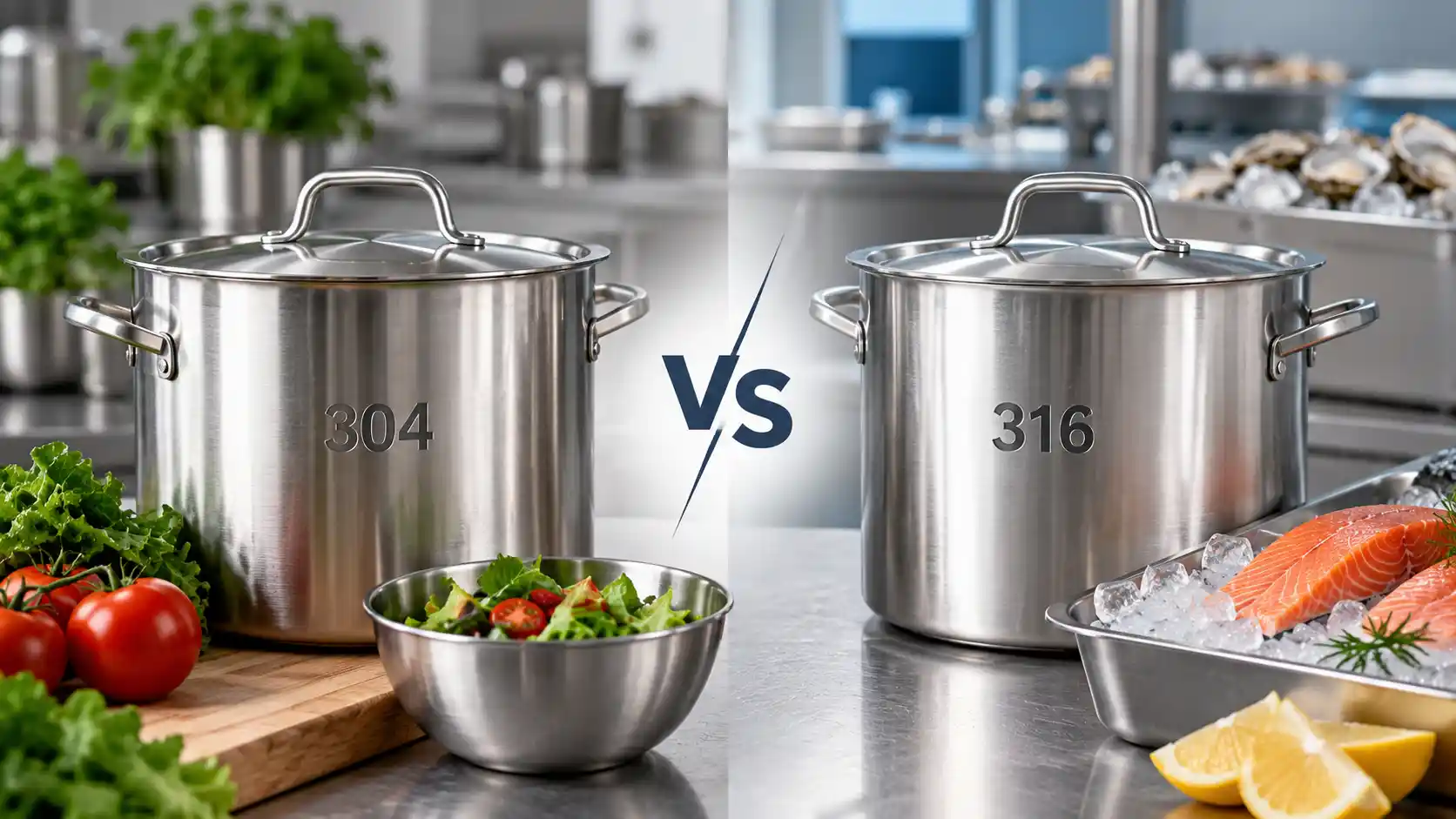
304 Stainless Steel is the most common grade used worldwide. It contains 18% chromium and 8% nickel. It offers excellent durability and good corrosion resistance for everyday use.
316 Stainless Steel has a similar base but includes a secret weapon: 2% to 3% Molybdenum. This single addition drastically changes how the metal reacts to harsh environments, specifically providing intense resistance to chlorides (salts) and industrial acids.
Chemical Composition Comparison Chart
| Feature | 304 Stainless Steel | 316 Stainless Steel |
|---|---|---|
| Chromium | 18% | 16% – 18% |
| Nickel | 8% | 10% – 14% |
| Molybdenum | 0% | 2% – 3% |
| Primary Strength | Good general corrosion resistance | High resistance to chlorides and acids |
| Cost | More affordable | Higher initial cost |
Performance Comparison in Food Processing Environments
When evaluating stainless steel for food processing, you must look at what the metal will be exposed to on a daily basis. Let’s compare how 304 vs 316 stainless steel handles the toughest factory conditions.
1. Corrosion Resistance, Chlorides, and Salt Exposure
Salt is the absolute worst enemy of stainless steel. In environments with high salt exposure, chloride ions attack the protective chromium oxide layer on the steel. This leads to “pitting corrosion,” where tiny, deep holes form in the metal. Bacteria can easily breed inside these pits, ruining the sanitary status of the machine.
- 304 Grade: Cannot handle heavy salt exposure for long periods. It will eventually pit and rust.
- 316 Grade: The added molybdenum protects the metal from chloride attacks, making it highly resistant to salt.
2. Exposure to Food Acids
Many foods are naturally acidic. Tomatoes, citrus fruits, vinegar, and fermented products can slowly eat away at standard metals.
- 304 Grade: Handles mild acids well but may degrade if exposed to hot, highly concentrated acidic liquids continuously.
- 316 Grade: Easily withstands strong food acids, ensuring no metallic taste is transferred to the product.
3. Cleaning Chemicals and CIP Systems
Modern food processing machinery relies on Clean-in-Place (CIP) systems. CIP systems use hot water mixed with strong, aggressive sanitation chemicals (like sodium hypochlorite or caustic soda) to clean the inside of pipes and tanks without taking the machines apart.
- 304 Grade: Can handle basic washing and mild detergents. However, frequent exposure to strong CIP chemicals can cause stress corrosion cracking.
- 316 Grade: Designed to endure the harsh, high-temperature chemical baths of aggressive CIP systems without degrading.
4. Expected Equipment Life
The lifespan of your machinery directly affects your return on investment (ROI). Using 304 stainless steel food equipment in a mild environment will easily give you decades of service. However, using 304 in a high-salt environment might force you to replace parts within a few years. In harsh environments, investing in 316 stainless steel food equipment guarantees a significantly longer equipment life.
Industry-Specific Applications: Which Metal is Best?
Different food products demand different machinery standards. Here is a breakdown of how material selection impacts specific food sectors.
Dairy Applications
The dairy industry processes milk, cheese, and yogurt, all of which contain lactic acid. Furthermore, dairy plants run strict and frequent CIP cleaning cycles to prevent bacterial growth.
- The Verdict: While 304 is used for outer casings and dry milk powder handling, 316 is highly recommended for the internal components, cheese vats, and pipes that handle liquid whey and intense CIP chemicals.
Beverage Applications
The beverage sector includes brewing beer, making wine, and processing fruit juices. These liquids are highly acidic and are often processed at elevated temperatures.
- The Verdict: 316 stainless steel is the standard for beverage processing. It ensures that the high acidity of fruit juices or the fermentation process in brewing does not corrode the tanks or alter the flavor profile of the drink.
Meat Processing
Meat processing environments are notoriously harsh. The machinery is constantly exposed to blood, animal fats, and heavy salt rubs. On top of that, plants require high-pressure, chemical-heavy washdowns every single day.
- The Verdict: 316 stainless steel is almost mandatory for direct contact surfaces in meat processing. 304 will succumb to pitting corrosion quickly under the constant assault of salt and washdown chemicals.
Dry Food and General Handling
Not all food processing is wet and acidic. Think about bakeries handling flour, sugar, and grains, or plants packaging dry snacks.
- The Verdict: 304 stainless steel is perfect for these applications. There are no harsh salts or acids to worry about, making 316 an unnecessary expense. (Note: In dry environments like flour mills, managing airborne dust is critical for safety. Consider looking into [Industrial Air Filtration](Link Here) solutions to pair with your 304 equipment).
The Cost Difference: Is 316 Worth the Investment?
Because of the higher nickel content and the addition of molybdenum, 316 stainless steel is generally 20% to 30% more expensive than 304 stainless steel upfront.
When you are purchasing large-scale food processing machinery, this cost difference can add up to thousands of dollars. This is why material selection requires careful thought.
If you process dry goods or mild vegetables, paying the extra 30% for 316 is a waste of money. However, if you run a heavy-duty meat processing plant, trying to save money by buying 304 will cost you more in the long run. The metal will rust, you will fail health inspections, and you will have to pay for costly replacement parts. In harsh environments, 316 pays for itself through a maximized expected equipment life.
Decision Guide: Which One Do You Actually Need?
To answer the core question: No, not every food-processing line needs 316 stainless steel. Here are some quick decision examples to guide your procurement process.
Choose 304 Stainless Steel when your process involves:
- Dry food processing (baking, grains, sugar).
- Mild environments (general sorting and conveying).
- Handling foods with neutral pH levels (like plain water or fresh vegetables).
- Outer machine frames and structural supports that do not touch the food or harsh chemicals directly. For general factory floor equipment, you can explore standard [Mechanical Machinery](Link Here).
Choose 316 Stainless Steel when your process involves:
- High salt exposure (brining, meat processing, soy sauce production).
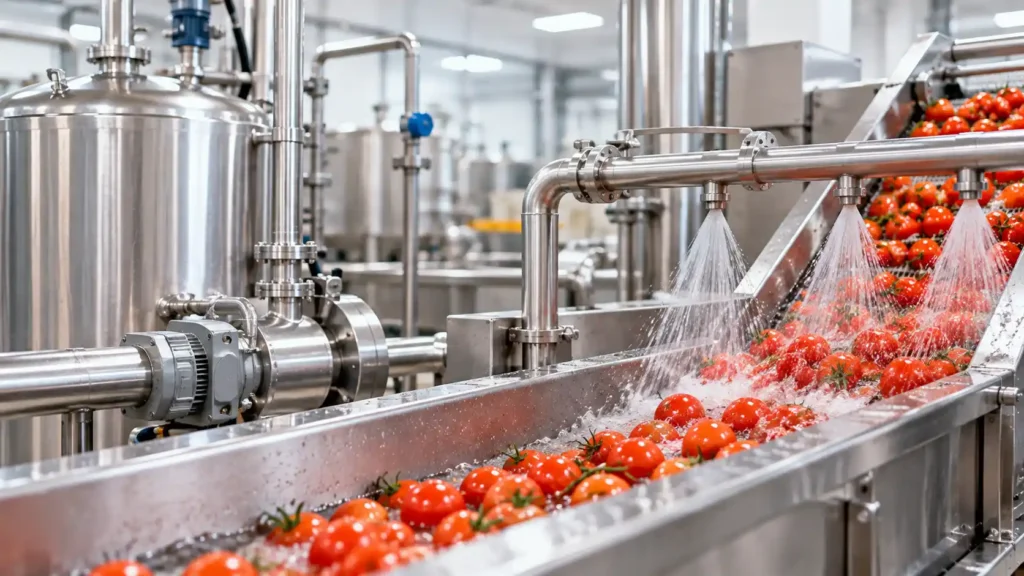
- Acidic liquids (fruit juices, tomato pastes, pickles, wine).
- Aggressive sanitation and CIP systems.
- Certain high-temperature dairy and beverage applications.
From Material Selection to Machine Specification
Understanding the difference between 304 vs 316 stainless steel food grade is only the first step. The next step is applying this knowledge to your machine specifications and quote requests.
When you request a quote for new equipment, do not just ask for “stainless steel.” Be specific. Tell the manufacturer exactly what chemicals, salts, and acids your machine will face. A reliable engineering partner will help you mix and match materials for example, using expensive 316 for the internal contact parts, and cost-effective 304 for the external frame, saving you money without sacrificing hygiene.
If you want a deeper dive into the legal requirements and design rules for these machines, we highly recommend reading our [Food & Beverage Machinery: Standards & Selection Guide](Link Here).
At Mekantra Technologies, we specialize in designing and sourcing high-quality [Food & Beverage Processing Machinery](Link Here). We don’t just sell equipment; we solve engineering procurement problems. We analyze your specific production line to ensure you get the exact material grade you need—no more, no less.
Conclusion
Choosing between 304 and 316 stainless steel doesn’t have to be a guessing game. By looking closely at your product’s acidity, your salt usage, and your CIP cleaning protocols, the right choice becomes clear. 304 offers fantastic value and durability for standard food handling, while 316 provides the ultimate armor against extreme, corrosive environments.
Make the right choice today to protect your product quality, pass your sanitary inspections, and extend the life of your machinery for decades to come.

Mekantra Engineering Team
The technical voice of Mekantra. Our team consists of sourcing specialists, mechanical engineers, and logistics experts dedicated to providing transparent insights and high-performance solutions for the global manufacturing sector.
Mekantra Engineering Team
The technical voice of Mekantra. Our team consists of sourcing specialists, mechanical engineers, and logistics experts dedicated to providing transparent insights and high-performance solutions for the global manufacturing sector.