Hygienic Design Food Processing Equipment Guide
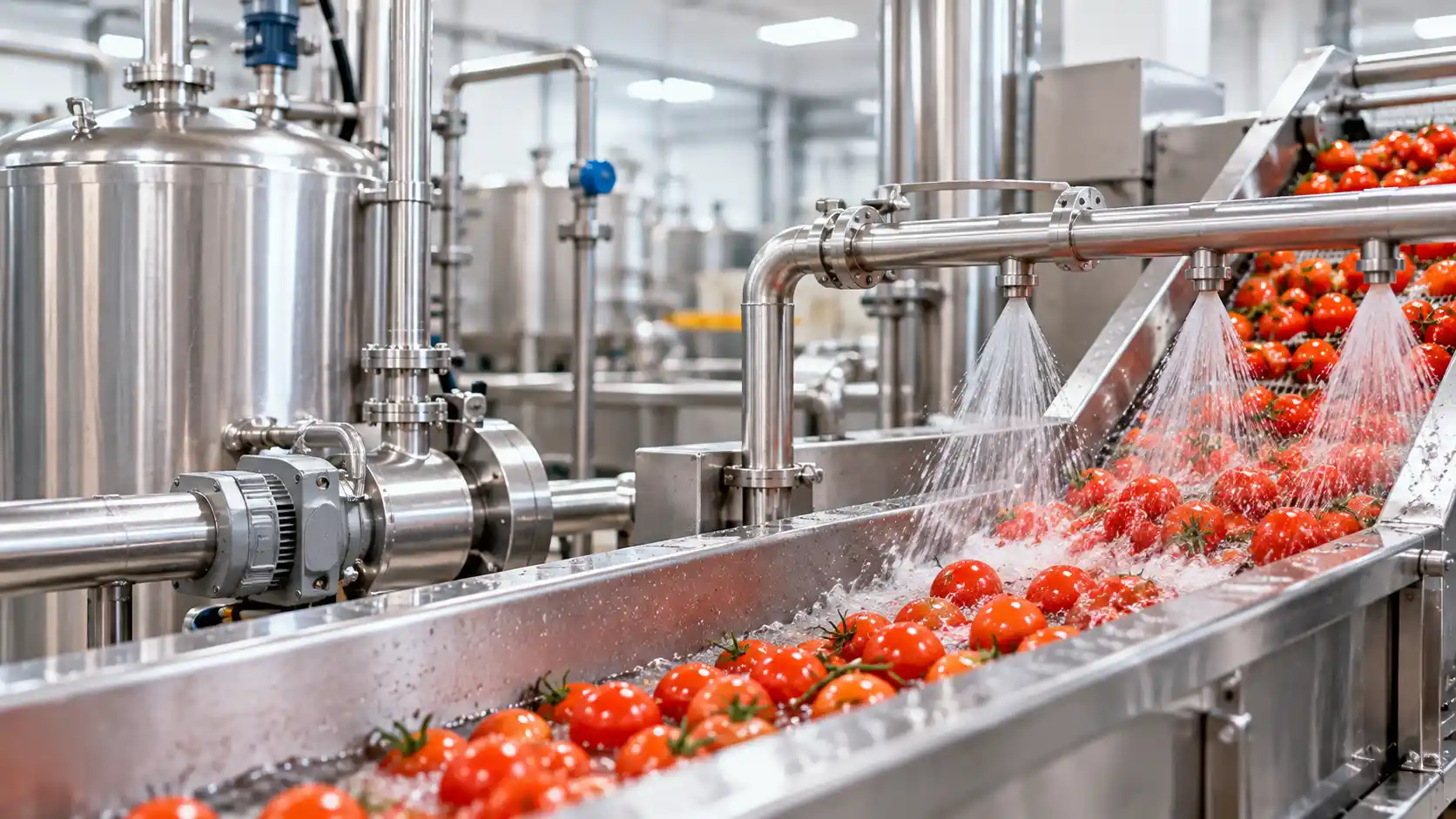
Food processing equipment must do more than move, mix, heat, cut or package ingredients. It must also allow effective cleaning, support sanitation procedures and minimize opportunities for contamination. Equipment with inaccessible joints, damaged surfaces or poorly designed drainage can make these tasks difficult, even when operators follow established cleaning procedures.
Hygienic design food processing equipment refers to machinery designed and constructed to support effective cleaning and reduce the risk of contamination during food production. Important considerations include food-contact materials, surface finishes, weld quality, drainage, seals, bearings and access for inspection.
These features matter across food manufacturing operations, including dairy processing, beverage production, meat processing, bakery manufacturing and packaged food production. Understanding hygienic design principles helps manufacturers, engineers and equipment buyers evaluate machinery based on both production performance and sanitation requirements.
What Does Hygienic Design Mean?
Hygienic design is the process of designing equipment, components and production systems so they can be cleaned effectively and operated under the intended hygienic conditions.
In food manufacturing, equipment may come into direct contact with ingredients, partially processed products or finished food. Other surfaces may indirectly affect hygiene through splashes, leaks, airborne particles or contact with operators and tools.
A hygienically designed machine aims to prevent product accumulation, minimize inaccessible areas, resist corrosion and provide practical access for cleaning and inspection.
For example, a food mixer with smooth product-contact surfaces and removable components may be easier to clean than one with exposed threads, deep crevices or inaccessible joints. The difference is not simply appearance; it affects how reliably operators can remove food residues and verify cleaning effectiveness.
Hygienic design must also reflect the product being processed. Equipment handling dry powders may have different cleaning requirements from machinery processing sticky sauces, dairy products or fatty ingredients.
Why Is Hygienic Design Important in Food Processing?
Food residues can accumulate on equipment surfaces, particularly where moisture, heat and organic material create favorable conditions for microbial survival or growth. If cleaning is ineffective, residues may contaminate subsequent production batches.
Good hygienic design supports food safety by making cleaning and sanitation more practical and repeatable.
Reducing Contamination Risks
Food-contact surfaces, seals, joints and transfer points must be designed to limit product buildup and prevent unwanted substances from entering the production process.
Equipment that is difficult to access may leave residues behind during cleaning. Suitable design helps reduce these problem areas, although effective cleaning procedures and verification remain essential.
Improving Cleaning Efficiency
Accessible components, smooth surfaces and appropriate drainage can reduce the effort required to clean machinery. Some equipment is designed for cleaning in place, while other equipment requires disassembly or manual cleaning.
The appropriate method depends on the machine, the food product, the cleaning chemicals and the manufacturer’s instructions.
Supporting Product Quality
Residues from one production run can affect the next product, particularly when a facility handles different ingredients, allergens, flavors or formulations.
A hygienic design helps make product changeovers easier to manage and supports procedures intended to prevent cross-contamination.
Supporting Equipment Reliability
Corrosion, trapped moisture and residue buildup may damage components or complicate maintenance. Appropriate materials, seals and construction methods help equipment withstand its intended cleaning conditions.
For manufacturers evaluating food and beverage processing machinery, hygienic performance should be considered alongside capacity, automation, operating costs and production requirements.
Key Hygienic Design Principles
Hygienic equipment design involves several connected features. A machine should be assessed as a complete system rather than judged by its material or surface finish alone.
1. Food-Contact Surfaces and Suitable Materials
Food-contact surfaces must be suitable for the food being processed, the operating temperature and the cleaning chemicals used. They should not introduce harmful substances into the product or react in ways that compromise food safety.
Stainless steel is widely used in food processing equipment because suitable grades can provide corrosion resistance, strength and cleanable surfaces. However, not all stainless steel grades perform equally in every environment.
Material selection should account for acidity, salt concentration, temperature, abrasion and exposure to cleaning agents. Certain applications may require specialized polymers, elastomers or other materials approved for their intended food-contact use.
2. Smooth Surface Finishes
Surface finish affects how easily food residues can be removed. Rough, damaged or heavily scratched surfaces may create areas where residues accumulate and cleaning becomes more difficult.
A suitable finish should be specified according to the equipment’s application and relevant hygienic requirements. Smoothness alone does not guarantee hygiene: the surface must also be compatible with the product, cleaning process and operating environment.
Manufacturers should inspect product-contact areas for scratches, pitting, damaged coatings and deterioration that could compromise cleanability.
3. Crevices and Dead Zones
Crevices are narrow gaps where food residues, moisture or cleaning chemicals can become trapped. Dead zones are areas that are difficult for cleaning solutions or mechanical cleaning actions to reach effectively.
Common problem areas include poorly fitted joints, exposed threads, overlapping plates, unsuitable gaskets and inaccessible corners.
Hygienic design seeks to minimize these areas through appropriate geometry, accessible connections and suitable component placement. Where joints or seals are necessary, their construction should support effective cleaning and inspection.
4. Drainability
Equipment should allow liquids to drain where the process and equipment design require it. Pooled water or product residues can interfere with cleaning and create conditions that support microbial growth.
Tanks, pipes, hoppers and other components should be assessed for their orientation, low points, outlets and ability to empty effectively.
Drainability requirements depend on the system. Some processes require complete liquid removal, while others have specific operating or cleaning procedures that determine how equipment should be drained.
5. Corrosion Resistance
Corrosion can damage surfaces, create pits and make equipment more difficult to clean. It may also introduce unwanted particles into the product.
Materials and finishes should be selected to withstand the food product and the cleaning and sanitation chemicals used. Concentrated chemicals, high temperatures and incorrect chemical application can damage even materials generally considered corrosion-resistant.
Regular inspection helps identify discoloration, pitting, damaged welds and deteriorating protective finishes before they become more serious problems.
6. Weld Quality and Joint Design
Welds in food-contact areas should be appropriately designed and finished so that they do not create cracks, pits, sharp edges or inaccessible residue traps.
Poorly finished welds may be difficult to clean and inspect. Suitable fabrication procedures help maintain surface continuity and reduce potential contamination points.
Equipment buyers should review the construction quality of tanks, pipes, hoppers and frames, paying particular attention to product-contact areas and connections.
7. Bearings, Seals and Lubrication
Bearings, shafts, seals and lubrication points require careful placement because they can create potential routes for contamination if they leak, wear or become difficult to maintain.
Components should be selected and installed according to the equipment’s operating conditions and hygienic requirements. Where incidental contact is possible, suitable lubricants and seals should be used in accordance with applicable requirements.
Maintenance access is also important. Worn seals and damaged bearings should be replaceable without creating unnecessary contamination risks during servicing.
8. Easy-Access Components
Hygienic machinery should allow operators and maintenance teams to inspect and clean relevant areas safely and effectively.
Depending on the equipment, this may involve removable guards, accessible filters, suitable inspection openings, removable product-contact parts or cleaning-in-place systems.
Access should be designed without introducing additional gaps, exposed threads or difficult-to-clean connections. Components should be reassembled correctly after cleaning to maintain the intended hygienic condition.
How Hygienic Design Supports Cleaning and Sanitation
Cleaning and sanitation are related but different activities. Cleaning removes food residues, grease and other unwanted material. Sanitation reduces microorganisms to an acceptable level under the applicable procedures and requirements.
A hygienically designed machine helps both activities by making surfaces accessible and reducing places where residues can remain.
Common cleaning approaches include:
- Manual cleaning: Operators clean accessible components using approved tools and cleaning procedures.
- Clean-in-place (CIP): Cleaning solutions circulate through suitable equipment without requiring complete disassembly.
- Clean-out-of-place (COP): Removable components are taken to a designated area for cleaning.
- Sanitation: An appropriate treatment is applied after cleaning, according to the product, equipment and food safety program.
Not every machine is suitable for CIP, and not every surface can be assumed clean because a cleaning cycle has been completed. Cleaning parameters, chemical concentration, temperature, contact time and mechanical action must be appropriate for the system.
Facilities should verify cleaning effectiveness using suitable inspection, testing and documented procedures. Equipment design supports sanitation, but it does not replace proper operating practices.
Common Hygienic Design Problems to Avoid
When inspecting food processing equipment, look for design or construction features that may make cleaning difficult.
| Potential problem | Why it matters | What to check |
|---|---|---|
| Deep crevices or gaps | Residues may become trapped | Joint design and accessibility |
| Rough or damaged surfaces | Cleaning may become less effective | Scratches, pitting and surface finish |
| Poor drainage | Liquids may remain in low points | Slopes, outlets and drainage paths |
| Inaccessible components | Inspection and cleaning become difficult | Access panels and removable parts |
| Damaged seals | Leakage or contamination may occur | Seal condition and correct installation |
| Corroded surfaces | Surface damage can impair cleanability | Pitting, discoloration and material suitability |
| Poorly finished welds | Crevices may collect product residues | Weld continuity and finish |
| Unsuitable lubricants | Lubricant contamination may be possible | Lubricant specification and application |
These checks should be carried out according to the machine design, the food safety program and relevant technical requirements.
Hygienic Design Checklist for Food Processing Equipment
Before purchasing, installing or modifying machinery, manufacturers can use the following checklist as a starting point.
| Inspection item | Key question |
|---|---|
| Food-contact materials | Are materials suitable for the product and cleaning chemicals? |
| Surface finish | Are product-contact surfaces smooth, intact and cleanable? |
| Crevices and joints | Are difficult-to-clean gaps minimized? |
| Drainability | Can liquids drain as required by the process? |
| Welds | Are relevant welds appropriately finished and accessible? |
| Corrosion resistance | Can the materials withstand the operating environment? |
| Bearings and seals | Are components correctly selected, placed and maintained? |
| Cleaning access | Can all required areas be inspected and cleaned? |
| Cleaning method | Is the equipment suitable for the intended manual, CIP or COP process? |
| Documentation | Are cleaning instructions and maintenance requirements available? |
| Verification | Can cleaning effectiveness be checked and recorded? |
The checklist should be adapted to the actual equipment and product. High-risk applications may require additional design reviews, specialist assessment and documented validation.
How to Choose Hygienic Food Processing Equipment
When comparing equipment suppliers, buyers should consider hygienic design alongside production capacity, energy consumption, automation and maintenance needs.
Start by identifying the food product, operating temperatures, expected production volume and cleaning method. Then review material specifications, product-contact surfaces, seals, joints and drainage arrangements.
Request relevant technical drawings, material information, cleaning instructions and maintenance documentation. For complex systems, a hygienic design review can help identify inaccessible areas or design features that may complicate cleaning.
The equipment should also be appropriate for the facility’s actual process. A machine designed for dry ingredients may not be suitable for a wet or sticky product without modifications and a corresponding cleaning assessment.
A well-selected machine supports efficient production while making routine cleaning, inspection and maintenance practical.
Frequently Asked Questions
1. What is hygienic design in food processing equipment?
Hygienic design means designing equipment so it can be cleaned effectively, maintained appropriately and operated in a way that reduces contamination risks. It includes suitable materials, surface finishes, joints, seals and drainage.
2. Why is stainless steel commonly used in food machinery?
Suitable stainless steel grades offer corrosion resistance, strength and cleanable surfaces. The correct grade and finish depend on the food product, cleaning chemicals, temperature and operating environment.
3. What are food-contact surfaces?
Food-contact surfaces are equipment surfaces that directly touch food during processing, storage or handling. They should be made from materials suitable for their intended use and designed to support effective cleaning.
4. What is the difference between cleaning and sanitation?
Cleaning removes food residues and other unwanted material. Sanitation is a separate step intended to reduce microorganisms to an acceptable level under the applicable food safety procedures.
5. What should buyers inspect before purchasing hygienic machinery?
Buyers should review food-contact materials, surface finish, weld quality, drainage, seals, component accessibility, cleaning compatibility, documentation and maintenance requirements.
Conclusion
Hygienic design is an important consideration when selecting or engineering food processing equipment. Suitable materials, smooth and intact surfaces, well-finished joints, effective drainage and accessible components help make cleaning and sanitation more reliable.
However, hygienic design is only one part of food safety. Appropriate cleaning procedures, equipment maintenance, operator training and verification are also essential.
Manufacturers who assess these factors before purchasing or modifying machinery can make better-informed equipment decisions and build more practical cleaning and maintenance programs.
Explore Mekantra Technologies
Explore Mekantra Technologies for industrial machinery and equipment sourcing information.

Mekantra Engineering Team
The technical voice of Mekantra. Our team consists of sourcing specialists, mechanical engineers, and logistics experts dedicated to providing transparent insights and high-performance solutions for the global manufacturing sector.
Mekantra Engineering Team
The technical voice of Mekantra. Our team consists of sourcing specialists, mechanical engineers, and logistics experts dedicated to providing transparent insights and high-performance solutions for the global manufacturing sector.