API 610 Standards: Complete Guide for Centrifugal Pumps
Summary
“API 610 is the API-issued standard that governs how centrifugal pumps are designed, built and tested for petroleum, petrochemical and natural gas service. This guide breaks down its classifications, material rules and testing requirements in plain terms.”
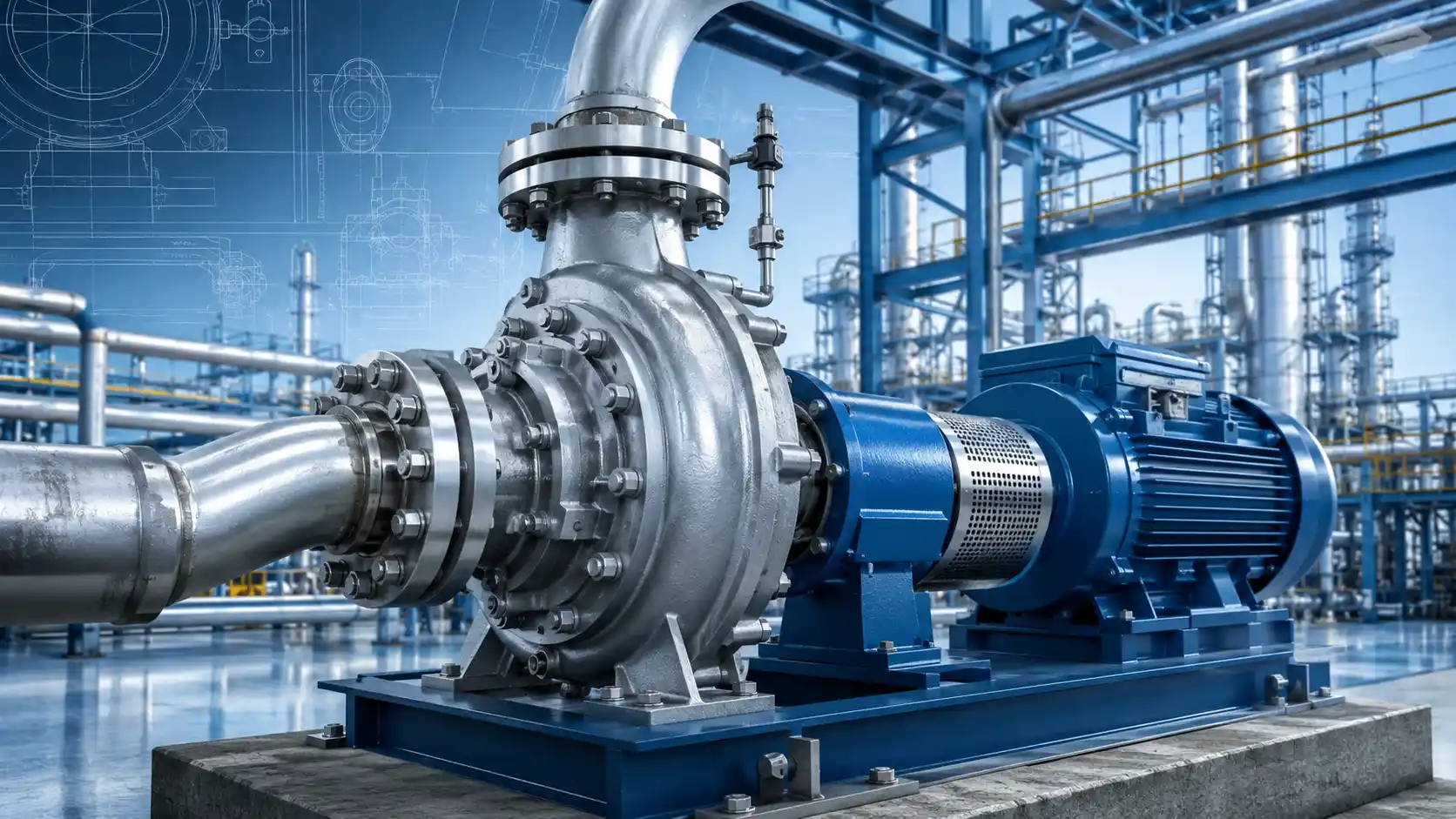
Centrifugal pumps handle some of the most demanding fluid transfer duties in oil, gas, and petrochemical plants: high-pressure, high-temperature, corrosive, and often flammable media. A pump failure in these services is not a minor maintenance issue; it can shut down a unit or create a safety incident. API 610 exists to prevent that. It is the American Petroleum Institute’s standard for the design, materials, manufacturing and testing of centrifugal pumps used in process service, and it is the reference document that engineers, procurement teams and vendors work against when specifying pumps for refineries, gas plants and petrochemical units.
What Is API 610?
API 610 is a technical standard published by the American Petroleum Institute that sets the minimum requirements for centrifugal pumps used in petroleum, petrochemical, and natural gas process services. It is identical in content to ISO 13709:2009, so a pump built to one is built to the other. This matters for plants sourcing equipment internationally.
The standard is currently in its 11th Edition, issued in September 2010 with errata added in July 2011. It does not cover pump installation, operation or maintenance procedures; those are handled by separate practices and the pump vendor’s documentation. API 610’s scope is limited to what happens before the pump reaches site: design, material selection, manufacturing and factory testing.
One detail engineers often miss: API 610 also applies to centrifugal pumps running in reverse as hydraulic power recovery turbines, a configuration sometimes used to recover energy from high-pressure process streams.
Scope and Applicability
API 610 applies to overhung pumps, between-bearings pumps and vertically suspended pumps used in petroleum, petrochemical and gas industry process services. It is written for critical, continuous-duty applications not every pump in a plant needs to meet it.
Utility services such as general water transfer, firewater, or non-critical cooling duties are often specified to Hydraulic Institute or ANSI B73.1 standards instead, since API 610 pumps carry a meaningfully higher cost due to their design margins and mandatory testing. The decision to specify API 610 usually comes down to service criticality: if a pump failure means unplanned downtime, safety risk or environmental release, API 610 is the default choice.
API 610 Pump Classifications
API 610 groups centrifugal pumps into three main categories based on how the impeller and shaft are supported. Understanding these categories is the starting point for any pump selection or specification review.
OH — Overhung pumps. The impeller is mounted outside the bearing support, overhanging the shaft end. This is the simplest and most common configuration for lighter-duty and moderate-flow applications. Subtypes range from OH1 through OH6, covering foot-mounted, centerline-mounted, close-coupled and vertical in-line variants.
BB — Between-bearings pumps. The impeller or impellers sit between two bearings, giving better shaft support for high-pressure, high-flow or multistage service. Subtypes BB1 through BB5 cover single-stage and multistage axially and radially split designs, commonly used for boiler feed and high-pressure charge pumps.
VS — Vertically suspended pumps. These have a vertical shaft and are often partially or fully submerged, used where the pump sits inside a tank, sump or vessel. Subtypes VS1 through VS7 include sump pumps, vertical turbine pumps and canned pumps used in flare knockout and similar services.
API 610 Pump Classification Overview
| Group | Subtypes | Configuration | Typical Application |
|---|---|---|---|
| OH — Overhung | OH1–OH6 | Impeller overhangs a single bearing set | Cooling water, general process transfer |
| BB — Between Bearings | BB1–BB5 | Impeller(s) supported between two bearings | High-pressure charge, boiler feed, multistage service |
| VS — Vertically Suspended | VS1–VS7 | Vertical shaft, submerged or sump-mounted | Sump drainage, flare knockout, vertical turbine service |
Selecting the right group depends on flow rate, discharge pressure, available space and whether the pump needs to be submerged. Between-bearings designs generally handle higher pressure and multistage duty, while overhung designs cover the bulk of moderate-duty applications at lower cost.
Key Design and Material Requirements
API 610 sets detailed rules for the mechanical design of a pump, not just its performance. Shaft design has to keep deflection within limits that protect the mechanical seal and bearings under the full range of operating conditions. Impellers must meet static and dynamic balance requirements to control vibration at running speed.
Casing design includes minimum wall thickness and corrosion allowance requirements, since these components form the pressure boundary and must survive years of service without leaking. Material selection is tied directly to the fluid being handled: pumps in sour (H2S-containing) service must use materials qualified under NACE MR0175 to resist sulfide stress cracking, while pumps handling corrosive or abrasive fluids need casing and impeller materials matched to that duty.
Baseplates, couplings and nozzle loading are also covered API 610 specifies allowable forces and moments on pump nozzles so piping stress doesn’t distort the casing or misalign the rotor. Shaft sealing itself is governed by a companion standard, API 682, which API 610 references rather than duplicates.
Testing and Quality Assurance under API 610
Design rules only matter if they’re verified before the pump leaves the factory. API 610 mandates a defined set of tests, and the results form part of the documentation package a buyer receives.
The hydrostatic test confirms the pressure-containing parts hold without leakage, typically at 1.5 times the maximum allowable working pressure. The performance test verifies that flow, head and efficiency match the guaranteed values within API-specified tolerance bands. The NPSH test confirms the pump’s suction performance and the margin available before cavitation begins a critical check for high-pressure refinery service, since running too close to the NPSH limit is one of the leading causes of pump damage. The mechanical run test checks vibration levels, bearing temperature and rotor stability at operating speed.
Core API 610 Test Requirements
| Test | Purpose | Typical Requirement |
|---|---|---|
| Hydrostatic Test | Confirms pressure-containing parts hold without leakage | 1.5× max allowable working pressure |
| Performance Test | Verifies rated flow, head and efficiency | Within API-specified tolerance bands |
| NPSH Test | Confirms suction performance and cavitation margin | Per agreed NPSH margin |
| Mechanical Run Test | Checks vibration, bearing temperature, rotor stability | Per API 610 vibration limits |
Buyers can specify whether they want to witness these tests directly, review certified test records, or waive certain tests for lower-criticality units this is usually agreed during the inspection and test plan discussion with the vendor.
API 610 vs ANSI B73.1 Key Differences
Not every centrifugal pump needs to be API 610. ANSI B73.1 covers general chemical and industrial process pumps and is a common alternative for less critical services.
API 610 vs ANSI B73.1
| Parameter | API 610 | ANSI B73.1 |
|---|---|---|
| Industry Focus | Petroleum, petrochemical, gas | General chemical/industrial |
| Design Margins | Higher, built for critical service | Lower, general-purpose |
| Testing Requirements | Mandatory hydrostatic, performance, mechanical run | Less stringent |
| Typical Cost | Higher | Lower |
| Interchangeability | Standardized baseplate/coupling dimensions | Standardized dimensions across vendors |
The right choice depends on service criticality and budget. Specifying API 610 for a non-critical utility pump adds cost without adding value, while under-specifying a critical refinery pump to ANSI B73.1 creates real reliability risk.
Benefits of API 610 Compliance for Refineries
Plants that consistently specify API 610 for critical services see fewer unplanned shutdowns tied to seal and bearing failures, since the standard’s design margins and mandatory testing catch weaknesses before installation. Standardized baseplate and coupling dimensions also make it easier to source spares or replace a pump from a different vendor without re-engineering the foundation or piping.
Beyond reliability, API 610 compliance supports regulatory and insurance requirements that many operators tie to recognized industry standards for critical rotating equipment. The higher upfront cost is generally offset over the pump’s operating life by lower maintenance frequency and fewer production losses from failure.
Common Challenges in API 610 Pump Selection
Specifying an API 610 pump correctly is not always straightforward. The most common issue is cost teams under budget pressure sometimes downgrade to a lower standard for a service that actually warrants API 610, creating reliability risk later.
NPSH margin is another frequent problem area. If the available NPSH at the pump suction is too close to the pump’s required NPSH, cavitation becomes likely, damaging the impeller and reducing performance over time this is covered in detail in our companion guide, [Preventing Cavitation in High-Pressure Refinery Pumps].
Material selection mistakes in sour or corrosive service, and delays around scheduling witness tests with vendors, round out the most common challenges plants face when procuring API 610 equipment.
How Mekantra Technologies Supports API 610-Compliant Procurement
Sourcing the right API 610 pump means matching classification, materials and testing requirements to the actual service conditions not just picking the cheapest quote that meets a spec sheet. Mekantra Technologies works with oil, gas and petrochemical operators to source and supply API 610-compliant centrifugal pumps and rotating equipment, helping plants avoid the selection mistakes outlined above. If you’re specifying a pump for critical process service, get in touch with our team to review your requirements.
Conclusion
API 610 gives refineries and petrochemical plants a consistent, tested benchmark for centrifugal pump reliability. Knowing how pumps are classified, what materials and design rules apply, and what testing is mandatory helps engineering and procurement teams specify equipment that will actually hold up in critical service rather than finding out the hard way during an unplanned shutdown. For pumps operating close to their suction limits, the next risk to plan for is cavitation covered in our guide, Preventing Cavitation in High-Pressure Refinery Pumps.
Frequently Asked Questions
What does API 610 stand for?
API 610 is the American Petroleum Institute’s standard for centrifugal pumps used in petroleum, petrochemical and natural gas industries.
Is API 610 the same as ISO 13709?
Yes. API 610’s 11th Edition is an identical adoption of ISO 13709:2009, so equipment built to either standard meets the same requirements.
What is the difference between OH, BB and VS pumps?
OH (overhung) pumps support the impeller outside the bearings, BB (between-bearings) pumps support it between two bearings for higher-pressure duty, and VS (vertically suspended) pumps use a vertical shaft, often submerged in a tank or sump.
How often is API 610 revised?
API standards are reviewed periodically by API committees; the current 11th Edition was issued in 2010 with errata added in 2011. Users should always confirm the latest active edition before specifying equipment.
Does API 610 cover pump installation?
No. API 610 covers design, materials, manufacturing and factory testing. Installation, operation and maintenance are addressed separately, typically through the vendor’s instructions and plant procedures.

Mekantra Engineering Team
The technical voice of Mekantra. Our team consists of sourcing specialists, mechanical engineers, and logistics experts dedicated to providing transparent insights and high-performance solutions for the global manufacturing sector.
Mekantra Engineering Team
The technical voice of Mekantra. Our team consists of sourcing specialists, mechanical engineers, and logistics experts dedicated to providing transparent insights and high-performance solutions for the global manufacturing sector.