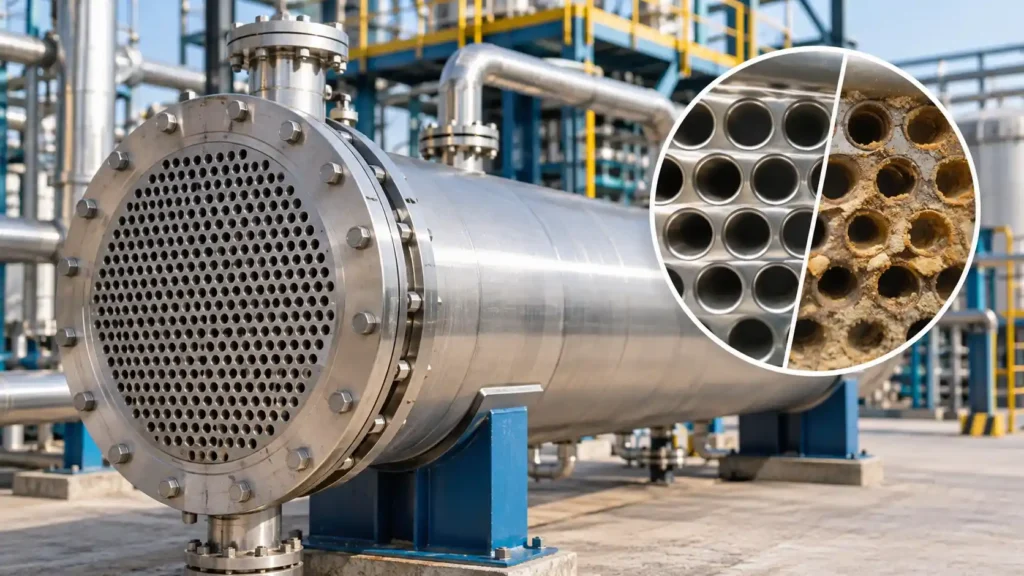
HTST vs UHT Pasteurization: How Do They Work?
Summary:
“HTST and UHT pasteurization use different combinations of temperature and holding time to improve milk safety and shelf life. This guide explains how both methods work, their effects on product quality, refrigeration requirements, and the equipment used in industrial dairy processing.”
Milk and other liquid food products require controlled processing to reduce harmful microorganisms and maintain product quality. Without suitable heat treatment, raw milk can contain bacteria that cause illness or lead to rapid spoilage.
Two widely used methods in the dairy industry are high-temperature short-time (HTST) pasteurization and ultra-high-temperature (UHT) processing. Although both methods use heat, they differ significantly in processing temperature, holding time, microbial control, and storage requirements.
Understanding HTST vs UHT pasteurization helps manufacturers select suitable processing equipment, maintain food safety, and meet consumer expectations. While HTST is commonly used for refrigerated milk, UHT processing allows properly packaged products to remain shelf-stable for several months.
What Is Pasteurization and Why Is It Important?
Pasteurization is a controlled heat treatment that reduces harmful microorganisms in food and beverages. It improves product safety while limiting unnecessary changes to flavor, nutritional value, and other quality characteristics.
In dairy processing, pasteurization helps control disease-causing bacteria that may be present in raw milk, including Salmonella, Listeria, and certain strains of Escherichia coli.
The main purposes of pasteurization are to:
- Reduce harmful microorganisms.
- Improve food safety.
- Slow microbial spoilage.
- Extend product shelf life.
- Maintain acceptable product quality.
However, pasteurization does not necessarily destroy all microorganisms or bacterial spores.
Conventional pasteurized milk requires refrigeration because some microorganisms may survive treatment or enter the product during subsequent handling.
UHT processing, when combined with aseptic packaging, goes further by achieving commercial sterility. This allows suitable products to remain stable at ambient temperatures before opening.
What Is HTST Pasteurization?
HTST stands for high temperature short time. It is a continuous heat treatment method widely used in commercial dairy plants.
The process heats milk to a specified temperature, maintains that temperature for a minimum holding time, and then rapidly cools the product.
For standard fluid milk, a common HTST pasteurization requirement is at least 72°C for 15 seconds. This combination provides effective pathogen reduction while maintaining many of the characteristics associated with fresh milk.
How Does HTST Pasteurization Work?
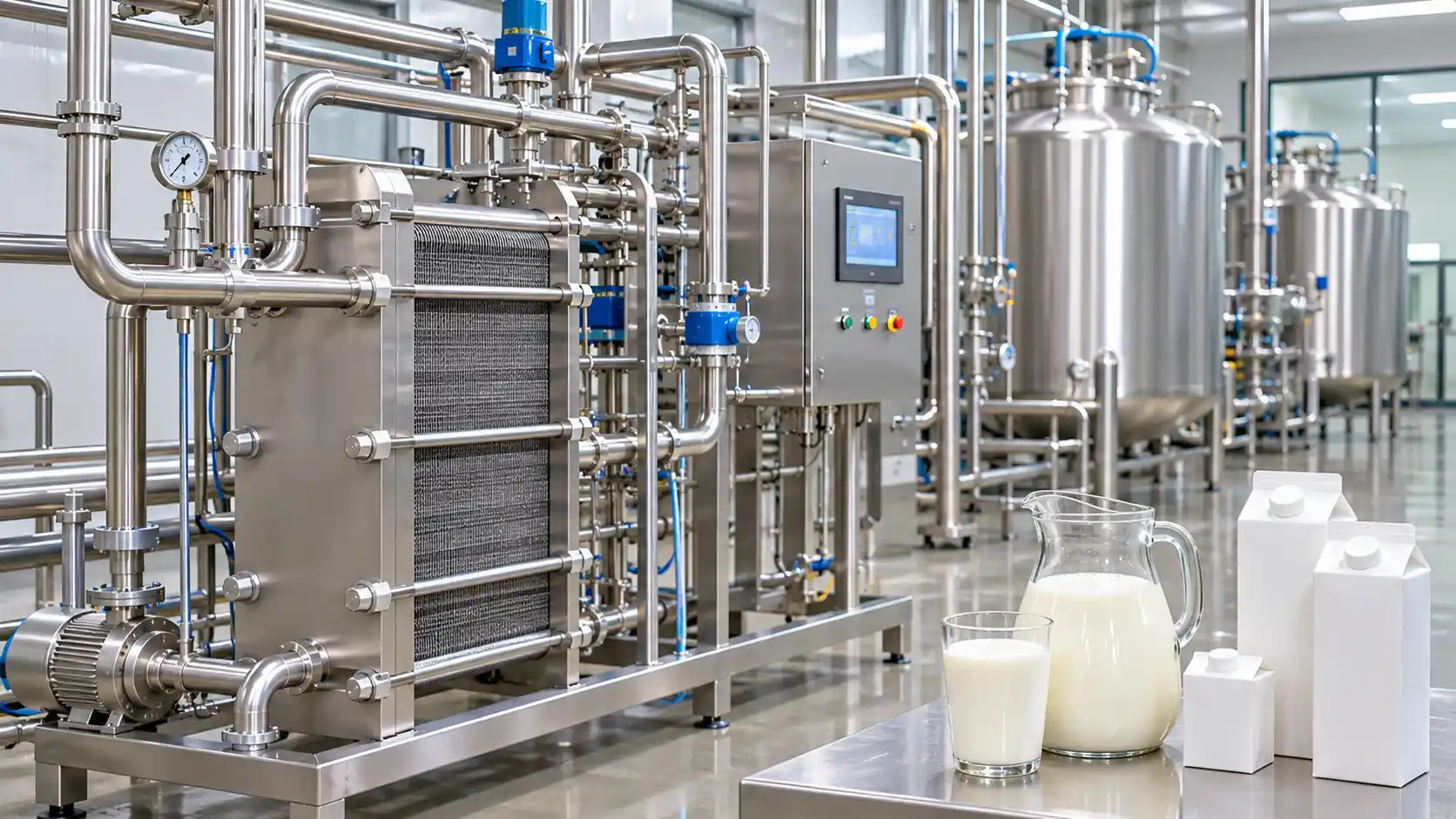
An industrial HTST system typically includes a balance tank, pump, heat exchanger, holding tube, temperature sensors, flow diversion valve, and cooling section.
The process takes place in several stages.
Step 1: Milk enters the processing system
Raw milk enters a balance tank that supplies a controlled flow to the pasteurization system.
Step 2: Milk is preheated
The milk passes through a regenerative heat exchanger. Heat recovered from outgoing pasteurized milk helps warm the incoming raw milk, reducing external heating requirements.
Step 3: Milk reaches pasteurization temperature
The heating section raises the milk to the required processing temperature.
Step 4: Milk passes through the holding tube
The holding tube maintains the required temperature for the specified treatment time. Its dimensions and product flow rate are designed to provide adequate holding time.
Step 5: Temperature is verified
Temperature sensors monitor the product. If the required temperature is not achieved, a flow diversion system prevents inadequately treated milk from continuing toward the finished-product section.
Step 6: Milk is cooled and packaged
Pasteurized milk passes through heat recovery and cooling sections before being transferred for hygienic filling and refrigerated storage.
HTST Temperature and Holding Time
| Parameter | Common HTST Conditions |
|---|---|
| Milk temperature | At least 72°C (161°F) |
| Holding time | At least 15 seconds |
| Processing method | Continuous heating |
| Storage requirement | Refrigeration |
| Main objective | Pathogen reduction |
These conditions apply to standard fluid milk under commonly used regulatory requirements. Products with different fat content, sugar concentration, or formulation may require different validated treatments.
Advantages and Limitations of HTST
HTST pasteurization offers relatively mild heat treatment, good energy recovery, and continuous production. It is particularly suitable for refrigerated milk sold through established cold-chain distribution systems.
Its main limitation is that ordinary pasteurization does not reliably destroy bacterial spores. The finished product therefore requires refrigeration and has a shorter shelf life than aseptically packaged UHT milk.
What Is UHT Processing?
UHT stands for ultra high temperature. It is a thermal processing method that exposes liquid food products to much higher temperatures for a short period.
Typical UHT milk processing temperatures range from approximately 135°C to 150°C, with holding times commonly around 2–5 seconds.
The objective is to achieve commercial sterility when the thermal treatment is combined with an appropriate aseptic processing and packaging system.
Commercial sterility means that microorganisms capable of growing under normal, non-refrigerated storage conditions are controlled to the required level. It does not mean absolute sterility.
How Does UHT Processing Work?
UHT processing typically involves preheating, high-temperature treatment, controlled cooling, aseptic transfer, and packaging.
Step 1: Product preheating
Milk is preheated to prepare it for the high-temperature treatment and improve energy efficiency.
Step 2: Ultra-high-temperature heating
The product is rapidly heated using direct steam contact or an indirect heat exchanger.
Step 3: Short holding period
The milk remains at the required UHT temperature for a validated holding time.
Step 4: Controlled cooling
The product is cooled rapidly. In direct steam systems, flash cooling may also remove water added during steam heating.
Step 5: Aseptic transfer
The treated product moves through sterilized processing equipment under controlled conditions that prevent recontamination.
Step 6: Aseptic filling
Milk is filled into sterilized packaging and sealed to maintain commercial sterility throughout its intended shelf life.
UHT Temperature and Holding Time
| Parameter | Typical UHT Conditions |
|---|---|
| Processing temperature | 135–150°C |
| Holding time | Approximately 2–5 seconds |
| Main objective | Commercial sterility |
| Packaging | Aseptic packaging |
| Unopened storage | Ambient conditions |
Actual temperature and holding-time requirements depend on the product formulation, processing system, microbial targets, and applicable food safety regulations.
Direct vs Indirect UHT Heating
UHT systems commonly use two heating methods.
Direct UHT heating: Steam contacts the product through steam injection or steam infusion. This allows rapid heating, followed by flash cooling. Direct systems require suitable steam quality and careful control of added water.
Indirect UHT heating: Heat passes through a separating surface, such as a tubular or plate heat exchanger. The heating medium does not directly contact the product.
Indirect systems can offer effective heat recovery, while direct systems can reduce exposure time during heating and cooling. The choice depends on product characteristics, quality requirements, and equipment design.
HTST vs UHT Pasteurization: Comparison Table
The following table summarizes the main differences between the two processing methods.
| Feature | HTST | UHT |
|---|---|---|
| Temperature | At least 72°C | Typically 135–150°C |
| Holding time | At least 15 seconds | Typically 2–5 seconds |
| Microbial control | Reduces pathogens | Achieves commercial sterility |
| Shelf life | Days to a few weeks | Several months unopened |
| Refrigeration | Required | Generally not required before opening |
| Packaging | Hygienic filling | Aseptic filling |
| Flavor | Typically fresher | May have a cooked flavor |
| Equipment | Pasteurization and cooling system | High-temperature and aseptic system |
| Main applications | Refrigerated milk | Long-life milk and beverages |
The most important difference is that HTST produces a pasteurized product requiring refrigeration, while UHT combined with aseptic packaging can produce a commercially sterile, shelf-stable product.
How HTST and UHT Affect Microorganisms
Microbial inactivation depends on both temperature and exposure time.
HTST pasteurization is designed to inactivate relevant disease-causing microorganisms in milk. However, some heat-resistant bacteria and bacterial spores may survive the treatment.
UHT processing uses substantially higher temperatures to achieve the microbial control required for commercial sterility.
Bacterial spores are more resistant to heat than many vegetative bacterial cells. Controlling these spores is particularly important when a product is intended for extended storage without refrigeration.
The required thermal process must be validated for the actual food product. Factors such as acidity, fat content, viscosity, and composition can influence microbial heat resistance.
Post-processing contamination must also be prevented. Even correctly heat-treated milk can become unsafe or spoil if contaminated during transfer or packaging.
How HTST and UHT Affect Product Quality
Heat treatment influences more than microbial safety. It can also affect milk flavor, proteins, vitamins, and physical stability.
Flavor and Aroma
HTST milk generally retains a flavor closer to fresh milk because it experiences a lower processing temperature.
UHT milk may develop a mild cooked flavor due to heat-related changes in milk components. The extent of this change depends on the heating method, total heat exposure, and storage conditions.
Nutritional Value
Both HTST and UHT milk retain most of their major nutrients, including protein, fat, calcium, and other minerals.
Some heat-sensitive vitamins may experience greater losses during more intensive thermal processing. However, UHT milk remains a nutritious dairy product.
Protein and Physical Stability
Higher heat exposure can increase whey protein denaturation and alter interactions between milk proteins.
During extended storage, some UHT products may also develop changes in flavor, sediment formation, or age gelation.
Manufacturers must therefore consider both microbial safety and product stability when developing a thermal processing system.
Shelf Life and Refrigeration Requirements
Shelf life is one of the biggest practical differences between HTST and UHT milk.
HTST Milk Shelf Life
HTST milk typically remains suitable for consumption for several days to a few weeks under appropriate refrigerated storage.
Its actual shelf life depends on raw milk quality, pasteurization effectiveness, hygienic filling, packaging, and cold-chain conditions.
Refrigeration slows the growth of surviving or subsequently introduced microorganisms. Maintaining the required storage temperature throughout distribution is essential.
UHT Milk Shelf Life
Properly processed and aseptically packaged UHT milk can remain shelf-stable for several months before opening.
This makes UHT products useful for long-distance distribution and markets where continuous refrigeration may be difficult or expensive.
However, once the package is opened, the product is exposed to environmental contamination. UHT milk should then be refrigerated and consumed according to the manufacturer’s instructions.
Why Aseptic Packaging Is Important in UHT Processing
UHT heating alone does not guarantee a shelf-stable product.
After heat treatment, the milk must be protected from microorganisms during transfer, filling, and storage.
Aseptic processing combines a validated thermal treatment with sterilized product-contact equipment, suitable packaging sterilization, controlled filling conditions, and hermetically sealed containers.
Aseptic cartons, bottles, and other compatible containers can protect the finished product from microbial contamination during storage.
Conventional hygienic filling and aseptic filling are not interchangeable. A filling machine designed for refrigerated pasteurized milk may not provide the sterile conditions required for long-life UHT products.
Manufacturers must therefore ensure that the processing and packaging systems are designed and validated together.
Equipment Differences Between HTST and UHT Processing
Both processing methods require controlled heating, holding, cooling, and hygienic product handling. However, UHT systems generally require more specialized high-temperature and aseptic equipment.
Industrial HTST and UHT pasteurizers, sterilizers, and milk filling lines must be selected according to product characteristics, production capacity, required shelf life, and packaging format.
| Equipment Component | HTST System | UHT System |
|---|---|---|
| Heating equipment | Commonly plate heat exchanger | Tubular, plate, or direct steam system |
| Holding section | Controlled holding tube | Validated high-temperature holding tube |
| Process controls | Temperature, flow and diversion | Thermal and aseptic controls |
| Cooling | Rapid cooling for refrigeration | Controlled cooling before aseptic filling |
| Packaging equipment | Hygienic filler | Aseptic filler |
| Cleaning | Clean-in-place (CIP) | CIP and validated sterilization procedures |
Hygienic Equipment Design
Both systems require food-contact surfaces that are suitable for cleaning and resistant to contamination.
Stainless steel construction, smooth welds, suitable seals, drainable piping, and accessible components help reduce product residue and microbial buildup.
Applying appropriate hygienic design principles is particularly important in dairy processing because milk residues can accumulate in poorly designed equipment.
Clean-in-place systems help remove product deposits, while UHT processing also requires validated sterilization procedures for the aseptic sections.
Dairy and Beverage Applications of HTST and UHT
HTST and UHT technologies are used across several dairy and beverage manufacturing applications.
Common HTST Applications
- Refrigerated drinking milk.
- Milk used in selected dairy products.
- Refrigerated flavored milk.
- Selected juices and liquid beverages.
Common UHT Applications
- Long-life drinking milk.
- Shelf-stable flavored milk.
- Selected creams and dairy beverages.
- Plant-based milk alternatives.
- Suitable shelf-stable liquid food products.
Different formulations require different thermal processing conditions. Milk pasteurization settings should not automatically be applied to juices, cream, or plant-based beverages.
The selection of food processing and packaging machinery must consider product viscosity, acidity, ingredients, thermal stability, and the intended distribution environment.
When Should Manufacturers Choose HTST or UHT?
The choice depends on the product, production objectives, and market requirements.
HTST is often suitable when manufacturers want a fresh milk flavor, shorter distribution distances, and refrigerated retail storage.
UHT is often preferred when extended shelf life, ambient storage, and wider distribution are important.
Manufacturers should evaluate the following factors:
- Required product shelf life.
- Availability and cost of refrigerated distribution.
- Product formulation and desired flavor.
- Equipment investment and operating costs.
- Production capacity and packaging requirements.
- Applicable food safety regulations.
UHT systems generally require greater investment in aseptic processing and filling equipment. However, they may reduce refrigeration requirements before opening and support distribution over longer distances.
HTST systems can be more appropriate for established fresh dairy markets where cold-chain infrastructure is already available.
Frequently Asked Questions
What is the main difference between HTST and UHT pasteurization?
HTST uses lower temperatures for a longer holding time to reduce pathogens. UHT uses much higher temperatures for a shorter period and, with aseptic packaging, achieves commercial sterility.
What temperature is used in HTST pasteurization?
Standard fluid milk is commonly pasteurized at a minimum of 72°C for 15 seconds. Requirements may differ for other dairy products and formulations.
Why does UHT milk last longer than HTST milk?
UHT processing provides more intensive microbial control. Aseptic packaging prevents recontamination, allowing the unopened product to remain shelf-stable for several months.
Does UHT milk need refrigeration?
Properly processed and aseptically packaged UHT milk generally does not require refrigeration before opening. After opening, it should be refrigerated according to the product label.
Is UHT milk less nutritious than HTST milk?
Both retain most major nutrients, including protein, fat, and calcium. Differences in heat treatment may affect certain heat-sensitive vitamins and milk proteins.
Can HTST pasteurization destroy bacterial spores?
Ordinary HTST pasteurization does not reliably destroy all bacterial spores. Refrigeration and appropriate hygienic handling remain necessary.
Why does UHT processing require aseptic packaging?
Aseptic packaging prevents microorganisms from entering the heat-treated product, helping maintain commercial sterility and ambient shelf stability.
Conclusion
HTST and UHT pasteurization are important thermal processing technologies with different applications in dairy and beverage manufacturing. HTST provides effective pathogen reduction while maintaining a fresh milk flavor, whereas UHT processing combined with aseptic packaging supports extended shelf life and ambient storage.
The appropriate method depends on product formulation, microbial safety requirements, quality expectations, refrigeration availability, and distribution needs.
For manufacturers planning a dairy production line, selecting suitable industrial food processing and machinery sourcing solutions begins with understanding these processing differences. Matching the heat treatment system, hygienic equipment design, and packaging technology to the intended product can support safe, consistent, and efficient production.

Mekantra Engineering Team
The technical voice of Mekantra. Our team consists of sourcing specialists, mechanical engineers, and logistics experts dedicated to providing transparent insights and high-performance solutions for the global manufacturing sector.
Mekantra Engineering Team
The technical voice of Mekantra. Our team consists of sourcing specialists, mechanical engineers, and logistics experts dedicated to providing transparent insights and high-performance solutions for the global manufacturing sector.