Food Processing Machinery: Top Equipment for Business
Summary
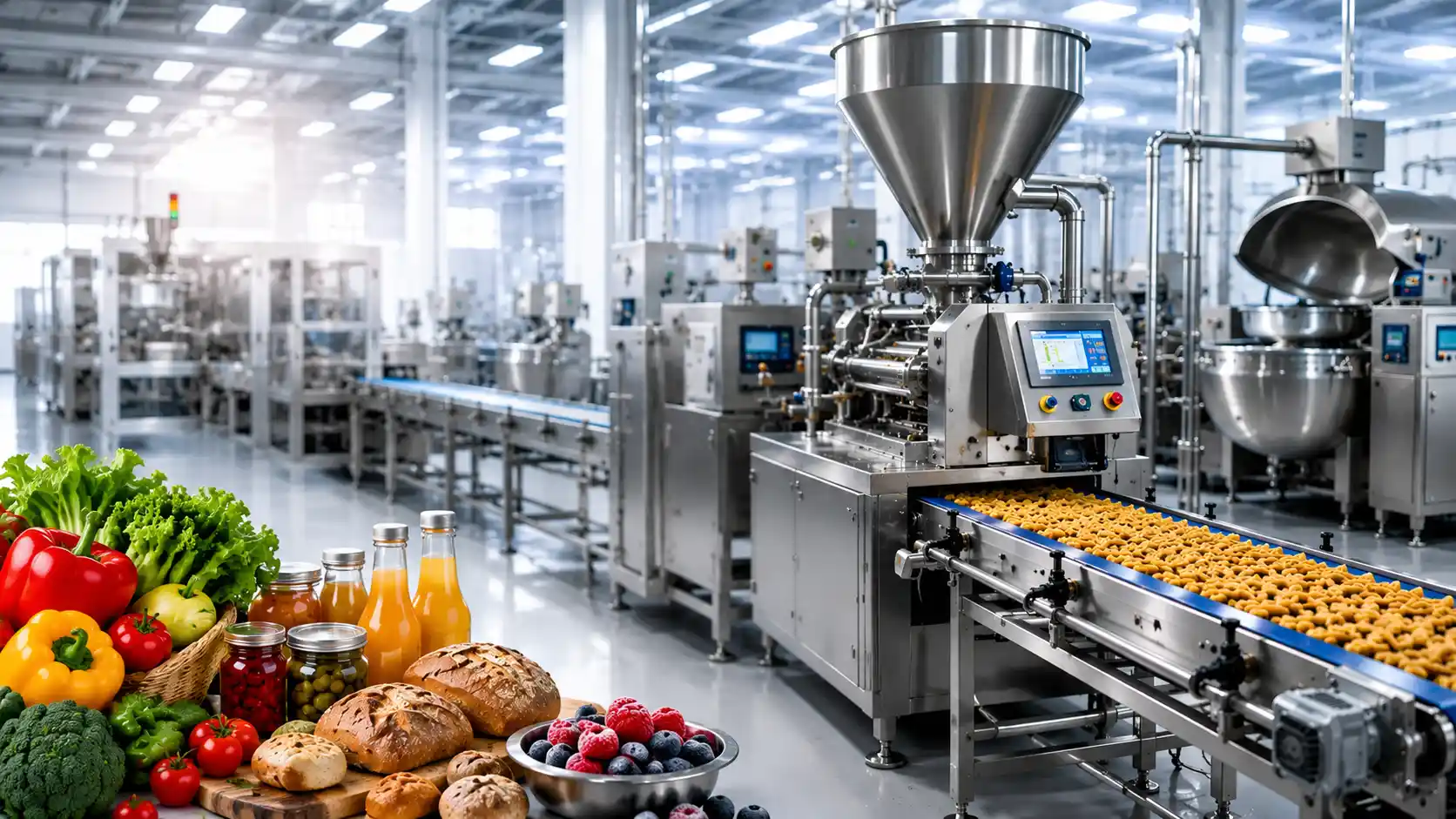
Food processing machinery includes equipment like mixers, grinders, packaging machines, and conveyor systems used in commercial food production. Choosing the right machinery improves output quality, reduces waste, and ensures compliance with food safety standards.
The global food processing equipment market is projected to exceed $80 billion by 2028, driven by rising demand for packaged foods, stricter safety regulations, and the push toward automation. For business owners, this growth signals one clear reality: investing in the right food processing machinery is no longer optional. It is a competitive necessity.
Whether you run a mid-scale bakery, a meat processing plant, or a beverage production facility, your choice of food equipment directly shapes product quality, production speed, and profit margins. The right processing systems reduce manual labor, minimize contamination risks, and allow your operations to scale without proportional cost increases.
Types of Food Processing Machinery Every Business Should Know
Every food production line relies on specific equipment categories that handle different stages of processing. Understanding these categories helps you identify gaps in your current setup and prioritize investments.
Sorting and Cleaning Equipment
Raw materials enter a facility with dirt, stones, defective pieces, and foreign objects. Sorting and cleaning equipment removes these contaminants before processing begins. Common machines include drum washers, air classifiers, destoners, and optical sorters. Optical sorters use cameras and sensors to detect and reject defective items at high speed, making them ideal for fruits, vegetables, and grains. This stage directly impacts final product safety and reduces downstream equipment wear.
Cutting, Grinding, and Mixing Machines
Once raw materials are clean, they often need size reduction or blending. Dicers, slicers, and bowl cutters handle cutting tasks for meat, vegetables, and cheese. Grinders break down materials into finer particles for products like sausages, spice powders, or pastes. Industrial mixers (including ribbon, paddle, and planetary types) combine ingredients uniformly, which is critical for batch processing in bakery, dairy, and confectionery operations. The right mixer type depends on product viscosity, batch size, and mixing action required.
Heat Processing Equipment
Heat treatment is essential for food safety and shelf life. Pasteurizers treat dairy, juices, and sauces at controlled temperatures to eliminate pathogens without destroying nutrients. Industrial ovens and fryers handle baking and frying at scale. Blanchers pre-cook vegetables before freezing. Sterilizers, such as retort systems, process canned goods at high pressure and temperature. These machines must maintain precise temperature control to meet HACCP and food safety standards consistently.
Packaging Machines
A packaging machine is where your product becomes shelf-ready. This category includes vacuum sealers for extending shelf life, form-fill-seal systems for high-volume automated packaging, shrink wrappers for bundling products, and labeling machines for regulatory compliance and branding. Modern packaging machines integrate directly with filling and weighing systems, enabling seamless transitions from processing to finished product. Automated packaging lines can handle hundreds of units per minute with minimal human intervention.
Conveyor Systems
Conveyor systems connect every stage of your food production line. Belt conveyors move products between processing stations. Roller conveyors handle heavier items like crates and boxes. Modular plastic belt conveyors offer easy cleaning and are common in wet processing environments. The right conveyor setup eliminates manual handling bottlenecks, improves hygiene (by reducing human contact), and keeps production flow consistent. When paired with sensors and PLC controls, conveyors become a key part of a fully automated processing system.
Equipment Comparison Chart
| Equipment Type | Primary Function | Best For | Automation Level | Cost Range (USD) |
| Sorting / Cleaning | Raw material prep | All food types | Semi to Full | $5K – $50K |
| Grinders / Mixers | Size reduction, blending | Meat, dairy, bakery | Semi-auto | $3K – $80K |
| Heat Processors | Cooking, sterilization | Beverages, canned goods | Full auto | $10K – $200K |
| Packaging Machines | Sealing, labeling, wrapping | All packaged products | Semi to Full | $8K – $150K |
| Conveyor Systems | Material transport | Production line flow | Full auto | $2K – $60K |
How to Choose the Right Food Equipment for Your Business
Buying food processing machinery is a significant capital decision. The wrong choice leads to production bottlenecks, compliance failures, and wasted budget. Use these five criteria to evaluate any equipment before purchasing.
Assess Your Production Volume
Start by defining your throughput capacity needs. How many kilograms or units per hour does your operation require? Small and mid-sized businesses often benefit from batch processing equipment, which handles fixed quantities per cycle. Larger operations need continuous processing systems that run nonstop with automated feeding and discharge. Choosing the wrong scale means either underutilizing expensive machinery or overloading a system that cannot keep up with demand.
Material Quality and Food Safety Compliance
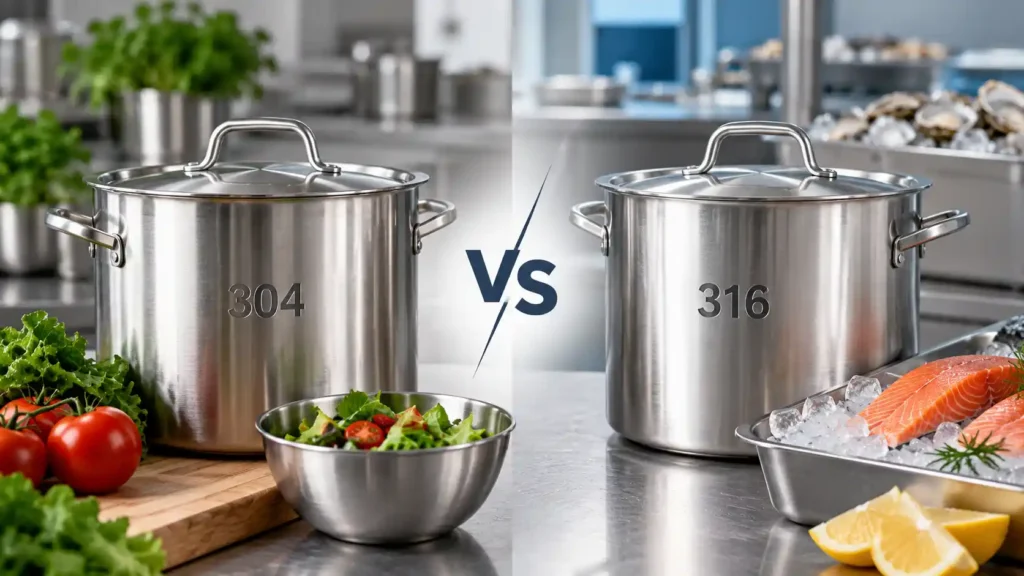
All food-contact surfaces must use food grade materials. Stainless steel 304 is the industry standard for most applications. Stainless steel 316 is required for acidic or high-salt environments. Avoid equipment with BPA-containing plastics in contact zones. Beyond materials, confirm that the machinery meets recognized food safety standards such as FDA regulations, HACCP protocols, and ISO 22000. Sanitary design principles (smooth welds, no dead zones, easy disassembly) prevent bacterial buildup and simplify cleaning.
Automation Level and Integration
Evaluate how much manual labor you want to eliminate. Semi-automatic equipment requires operator input at certain stages, while fully automated processing systems handle everything from feeding to packaging with minimal supervision. Look for machines with PLC (Programmable Logic Controller) controls and HMI (Human-Machine Interface) panels. Also confirm compatibility with your existing production line, including conveyor systems, sensors, and ERP/MES software integration.
Maintenance and Long-Term Costs
The purchase price is only part of the total cost. Factor in your maintenance schedule, spare parts availability, and the manufacturer’s service network. Equipment with tool-free disassembly and CIP (Clean-in-Place) systems reduces daily cleaning time significantly. Ask for the total cost of ownership (TCO) estimate, including energy consumption, consumables, and projected downtime over a 5 to 10 year period.
Energy Efficiency
Energy costs eat into margins, especially for heat-intensive operations. Look for machinery with Variable Frequency Drives (VFDs) that adjust motor speed based on load, reducing electricity consumption by 20-30%. Heat recovery systems capture and reuse thermal energy from ovens, pasteurizers, and sterilizers. Energy-efficient food equipment not only lowers operating costs but also supports sustainability goals that many retailers and distributors now require from suppliers.
Selection Criteria Checklist
| Criteria | Key Question | What to Look For |
| Production Volume | How many units/kg per hour? | Batch vs. continuous; scalable throughput |
| Material Safety | Does it meet food-grade standards? | SS 304/316, FDA-approved surfaces |
| Automation | How much manual labor to reduce? | PLC, HMI panels, IoT-ready |
| Maintenance | What is the upkeep requirement? | Easy-clean design, parts availability |
| Energy Use | What are the running costs? | VFD motors, heat recovery, efficiency rating |
| Compliance | Which certifications are needed? | HACCP, ISO 22000, CE marking |
Food Processing Machinery Trends in 2026
The food processing industry is evolving rapidly. Businesses that stay ahead of these trends position themselves for lower costs, higher output, and stronger compliance.
Smart automation is the biggest shift. IoT-enabled processing systems now offer real-time monitoring of temperature, pressure, speed, and output. Operators receive alerts on their phones when a machine drifts out of spec, preventing costly batch failures. Predictive maintenance algorithms analyze equipment vibration and performance data to flag potential breakdowns before they happen.
Sustainability is driving equipment design changes. Newer food equipment models consume 15-25% less water and energy compared to machines built five years ago. Water recycling systems, low-emission burners, and energy recovery modules are becoming standard features rather than premium add-ons.
Modular machinery is gaining traction among growing businesses. Instead of buying a single large system, companies invest in modular units that can be added or reconfigured as production demand changes. This approach reduces upfront capital risk and provides flexibility.
AI-driven quality inspection is being integrated directly into conveyor systems and packaging machine lines. Cameras and sensors detect defects, foreign objects, and fill-level inconsistencies at speeds that human inspectors cannot match. These systems also generate data logs for compliance audits automatically.
Hygienic design standards continue to evolve. Tool-free disassembly, rounded interior surfaces, and CIP (Clean-in-Place) systems now come standard on most mid-range and premium industrial food equipment. This reduces cleaning time by up to 40% and minimizes contamination risks.
Calculating ROI on Food Processing Equipment
Before signing a purchase order, run the numbers. Equipment ROI depends on four main factors: output increase, labor savings, waste reduction, and energy costs.
Start by comparing your current manual or semi-manual throughput capacity against the projected output of the new machinery. Most automated food processing machinery delivers 5x to 20x the output of manual processes while requiring 60-75% fewer workers. The labor savings alone often justify the investment within 12 to 18 months.
Waste reduction is another major factor. Manual handling typically results in 8-15% product waste due to inconsistent portioning, spillage, and contamination. Automated systems bring waste rates down to 1-3%, which directly improves your yield per raw material dollar spent.
Factor in energy costs over the equipment’s expected lifespan (typically 10-15 years for well-maintained industrial food equipment). A machine with VFDs and heat recovery may cost 10-15% more upfront but saves thousands annually in utility bills. For SMEs with limited capital, leasing and equipment financing options can spread costs while preserving cash flow.
ROI Comparison: Manual vs. Automated
| Factor | Manual Process | Automated Machinery |
| Output per Hour | 200 – 500 units | 2,000 – 10,000 units |
| Labor Required | 8 – 15 workers | 2 – 4 operators |
| Waste Rate | 8 – 15% | 1 – 3% |
| Product Consistency | Variable | Uniform output |
| Typical Payback Period | N/A | 12 – 24 months |
Invest in the Right Food Processing Machinery
The right food processing machinery transforms your business operations. It increases output, cuts labor and waste costs, ensures consistent product quality, and keeps you compliant with food safety regulations. The key is to match equipment to your specific production volume, product type, and growth plans rather than defaulting to the cheapest or most expensive option available.
Start by auditing your current production line. Identify bottlenecks where manual handling slows you down or introduces quality risks. Prioritize food equipment that addresses those gaps first, then expand as your throughput demands grow.
Mekantra Technologies offers a range of processing systems, packaging machines, and conveyor solutions designed for businesses at every scale. Whether you are upgrading an existing facility or building a new production line from scratch, the right equipment partner makes all the difference. Ready to upgrade your food processing setup? Visit our site to explore equipment options or request a free consultation today.

Mekantra Engineering Team
The technical voice of Mekantra. Our team consists of sourcing specialists, mechanical engineers, and logistics experts dedicated to providing transparent insights and high-performance solutions for the global manufacturing sector.
Mekantra Engineering Team
The technical voice of Mekantra. Our team consists of sourcing specialists, mechanical engineers, and logistics experts dedicated to providing transparent insights and high-performance solutions for the global manufacturing sector.