Mini Excavators vs Standard Excavators – Choosing the Right Digger for Profit
Quick Summary
Choosing between a mini and standard excavator is critical for your urban project’s profitability. While standard units offer unmatched power for large-scale work, mini-excavators dominate tight city job sites with superior maneuverability and lower operating costs, often yielding a higher ROI.
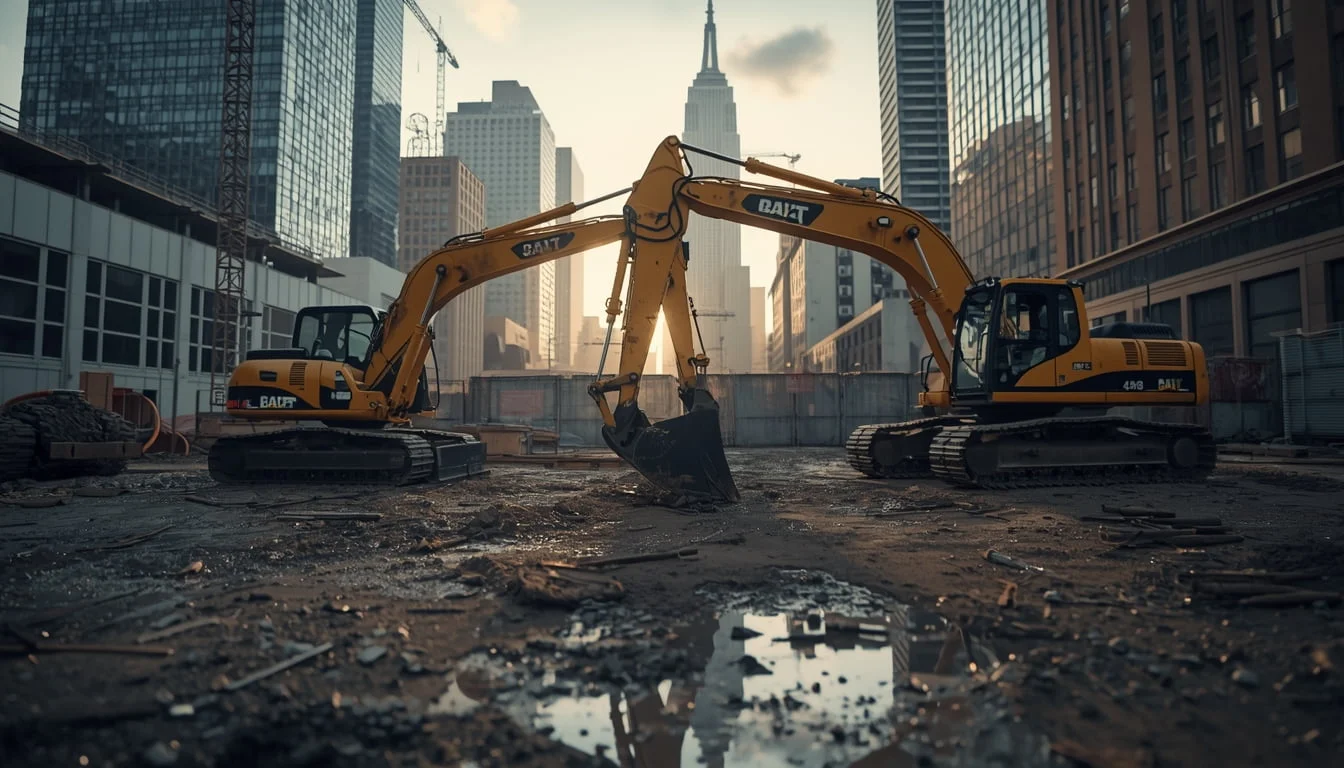
Picture this: you’re managing a downtown demolition or a residential utility installation. The street is narrow, overhead lines are a constant concern, and every square foot of your job site is precious. Do you bring in the heavy-hitting, full-size excavator that can get the job done fast but might cause collateral damage and logistical nightmares? Or do you opt for its smaller, more agile cousin, the mini-excavator? This is the central dilemma facing modern urban construction professionals. The choice in the Mini-Excavators vs. Standard Excavators debate isn’t just about size it’s about strategy, cost, and ultimately, your bottom line. Let’s dig in.
Before we can analyze the ROI, we need to establish a clear baseline. The primary difference between these machines, as noted by industry sources like DOZR and other equipment experts, is their operating weight. This single specification influences everything from power and digging depth to transportation and job site accessibility.
Defining the Mini-Excavator (Compact Excavator)
A mini-excavator, also known as a compact excavator, is a tracked or wheeled digging machine with an operating weight of generally under 10 metric tons (or about 22,000 pounds). Their defining characteristic is their small footprint and, in many cases, a reduced or zero tail swing design. This means the machine’s housing does not extend beyond its tracks as it rotates, making it ideal for working right up against walls, barriers, or in a single lane of traffic.
- Common Applications: Utility trenching, residential landscaping, indoor demolition, small-scale foundation work, and general repair tasks in confined spaces.
Defining the Standard Excavator (Full-Size or Crawler Excavator)
A standard excavator, often called a full-size or crawler excavator, is the powerhouse of the construction world. These machines typically have an operating weight that starts at 10 metric tons and can exceed 90 metric tons (over 200,000 pounds). Their size grants them immense hydraulic power, significant reach, and massive bucket capacity, making them the go-to for large-scale earthmoving and heavy-duty tasks.
- Common Applications: Large commercial building foundations, bulk earthmoving, heavy demolition, road construction, mining, and large-scale trenching.
Head-to-Head Comparison: A Deep Dive into Key Specifications
To truly understand the Mini-Excavators vs. Standard Excavators matchup, we need to compare their performance metrics side-by-side.
| Specification | Mini-Excavator | Standard Excavator | Urban Construction Implication |
| Operating Weight | 1 – 10 metric tons | 10 – 90+ metric tons | Determines ground pressure, transport needs, and accessibility. |
| Digging Depth | 6 – 15+ feet | 15 – 35+ feet | Mini is sufficient for utilities; Standard is needed for deep foundations. |
| Bucket Capacity | 0.02 – 0.5 cubic yards | 0.5 – 5.0+ cubic yards | Standard moves more material per cycle, increasing speed on large jobs. |
| Power (HP) | 10 – 70 HP | 70 – 500+ HP | Dictates breakout force for tough materials and attachment capability. |
| Tail Swing | Zero, Short, or Conventional | Conventional | Zero tail swing is a game-changer for safety and maneuverability in tight urban corridors. |
| Transport | Pickup & trailer | Lowboy trailer, special permits | Drastically different logistics and costs. Mini-excavators offer “hop-on, hop-off” ease. |
The Case for Mini-Excavators: Maximizing ROI in Urban Environments
For many urban construction projects, the mini-excavator isn’t just an alternative; it’s the superior financial and logistical choice. Its advantages directly address the primary pain points of city-based work.
1. Unmatched Maneuverability in Tight Spaces
Urban job sites are notoriously cramped. Whether it’s a backyard renovation, a utility repair in a narrow alley, or interior demolition, a standard excavator simply won’t fit. A mini-excavator can navigate through gates, between buildings, and even indoors. This accessibility means you can take on jobs that are physically impossible for larger equipment, opening up new revenue streams.
2. Drastically Reduced Transportation & Mobilization Costs
This is a massive factor in calculating ROI. Transporting a standard excavator requires a specialized lowboy trailer, often a commercial driver’s license (CDL), and potentially expensive permits for oversized loads. This adds significant time and cost before the work even begins.
Conversely, many mini-excavators can be towed on a heavy-duty trailer behind a standard work truck. This dramatically lowers mobilization costs, reduces scheduling complexity, and allows for rapid deployment between multiple smaller job sites in a single day, maximizing the machine’s utilization rate.
3. Lower Ground Pressure and Site Impact
The heavy weight of a standard excavator can easily damage sidewalks, driveways, asphalt, and landscaped areas. The resulting repair costs can eat into project profits. Mini-excavators, with their lighter weight and rubber track options, exert significantly less ground pressure. This minimizes surface damage, reducing the need for costly site restoration and keeping clients happy.
4. Supreme Versatility Through Attachments
While standard excavators also use attachments, the sheer variety and interchangeability on mini-excavators make them the Swiss Army knife of the urban job site. With a quick coupler system, a single operator can switch between:
- Hydraulic Hammers/Breakers: For concrete and asphalt demolition.
- Augers: For drilling holes for fence posts, piers, or planting.
- Grapples: For clearing debris or handling materials.
- Compaction Wheels: For trench backfilling.
- Grading Buckets: For precise finishing work.
This versatility means one machine can perform the work of several, reducing the need for additional specialized equipment and labor on site.

When Standard Excavators Still Reign Supreme (Even in the City)
Despite the compelling advantages of mini-excavators, there are urban scenarios where the raw power and scale of a standard excavator are non-negotiable. Attempting these jobs with a mini-excavator would be inefficient and unprofitable.
1. Unrivaled Power for Heavy Demolition & Earthmoving
When demolishing a multi-story structure or clearing a large commercial lot for development, you need the immense breakout force and large bucket capacity of a standard excavator. It can tear through reinforced concrete and move thousands of cubic yards of earth with an efficiency a mini-excavator could never match.
2. Superior Reach and Digging Depth
Constructing a building with a deep foundation or an underground parking garage requires significant digging depth and reach. A standard excavator can easily reach the required depths of 20-30 feet or more, and its long boom allows it to place spoil piles well away from the excavation site, keeping the work area clear and safe.
3. Efficiency on Large-Scale, Unrestricted Projects
If the urban project is on a large, open lot (like a former industrial site being redeveloped), the constraints of a typical city job disappear. In this case, the standard excavator’s ability to move more material with each cycle translates directly to faster job completion and higher profitability.
Calculating the True ROI: Beyond the Sticker Price
The most critical part of the Mini-Excavators vs. Standard Excavators analysis is understanding the Total Cost of Ownership (TCO) and project-specific profitability.
Total Cost of Ownership (TCO)
- Acquisition Cost: A new mini-excavator can cost between $30,000 and $90,000, while a standard excavator starts well over $100,000 and can reach over $500,000. Rental rates reflect this disparity.
- Fuel Consumption: This is a major operational expense. A mini-excavator might consume 1-3 gallons of fuel per hour, whereas a standard excavator can burn 5-15+ gallons per hour. Over the life of a project, this difference is substantial.
- Maintenance & Repair: While all machines require maintenance, the parts and labor for standard excavators are significantly more expensive. A track replacement on a mini-excavator is a fraction of the cost of one for a 20-ton machine.
- Insurance: Insurance premiums are directly tied to the value of the equipment. Insuring a standard excavator fleet is a much larger line item on your balance sheet.
Project-Specific Profitability
Your ROI is ultimately determined by how well the machine matches the job.
- Using a standard excavator for a small utility trench: You incur massive transportation costs, risk site damage, and have an oversized, inefficient machine for a delicate task. The ROI would be negative.
- Using a mini-excavator for a large commercial foundation: The job would take exponentially longer, driving up labor costs and potentially incurring penalties for project delays. The ROI would be abysmal.
The key is matching the tool to the task. For a business focused on residential work, landscaping, and utility repairs in a dense metropolitan area, a fleet of mini-excavators will almost certainly generate a higher overall ROI.
The “Midi” Excavator: A Growing Contender
It’s worth noting the rise of the “midi-excavator,” which operates in the 6 to 10-metric-ton range. These machines bridge the gap, offering more power and reach than a compact model but retaining better maneuverability and lower transport costs than a full-size machine. For contractors who frequently face jobs that are slightly too big for a mini but don’t warrant a standard, the midi can be the perfect, high-ROI solution.
Final Verdict: Making the Smart Investment for Your Urban Construction Business
At the end of the day, the Mini-Excavators vs. Standard Excavators debate isn’t about which machine is “better” it’s about which machine is better for your specific business model and the jobs you target.
For the modern urban contractor, the mini-excavator is often the MVP. Its ability to navigate tight job sites, minimize collateral damage, and be transported cheaply and easily makes it a highly profitable asset for a wide range of common city projects. Its versatility with attachments further solidifies its value, allowing one machine to do the work of many.
However, for large-scale earthmoving, deep excavation, and heavy demolition, the standard excavator remains the undisputed champion. The smart contractor understands the strengths and weaknesses of both and builds a fleet or a rental strategy that deploys the right machine for the right job, every single time. By carefully analyzing your project pipeline and the true costs of ownership, you can ensure that every piece of equipment you deploy is maximizing your return on investment.

Mekantra Engineering Team
The technical voice of Mekantra. Our team consists of sourcing specialists, mechanical engineers, and logistics experts dedicated to providing transparent insights and high-performance solutions for the global manufacturing sector.
Mekantra Engineering Team
The technical voice of Mekantra. Our team consists of sourcing specialists, mechanical engineers, and logistics experts dedicated to providing transparent insights and high-performance solutions for the global manufacturing sector.