FOB vs CIF for Heavy Machinery: USA Importer Guide
Importing heavy industrial equipment overseas whether sourcing high-precision CNC Machines, heavy-duty Construction Machinery, or automated Mechanical Machinery is a major capital investment. When procurement officers review a factory proforma invoice, the quoted sticker price represents only a fraction of the total budget. Moving a 20-ton machine across international waters requires careful planning around logistics, risk management, and regulatory compliance.
One of the most critical decisions you will make when structuring an international machinery purchase contract is selecting the correct Incoterm (International Commercial Term). When importing machinery from China or other manufacturing hubs, the two primary shipping terms buyers encounter are FOB (Free On Board) and CIF (Cost, Insurance, and Freight).
Selecting the wrong term can quickly erode your profit margins through hidden destination port surcharges, inadequate cargo insurance, vessel delays, and unexpected U.S. Customs clearance issues.
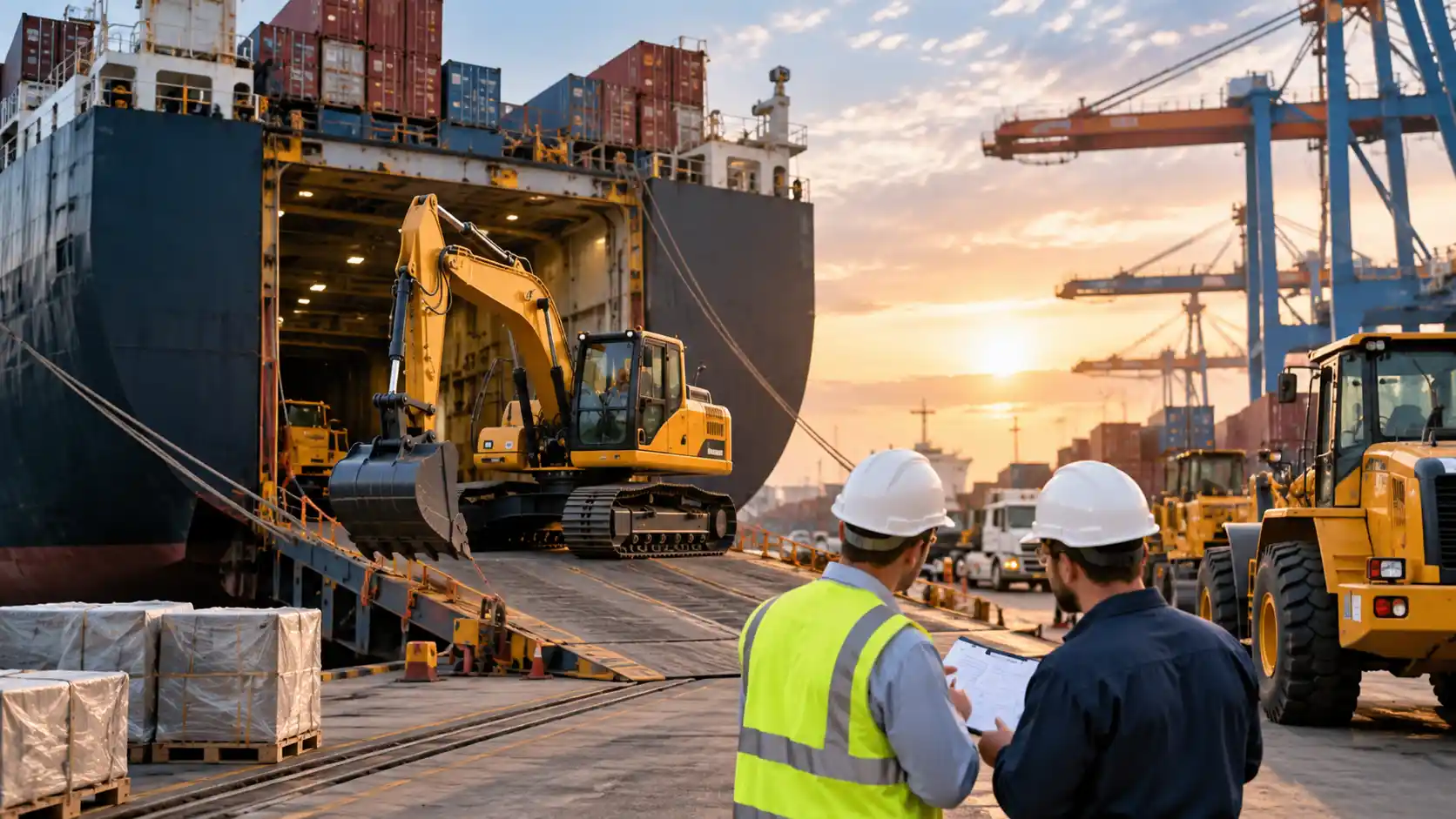
Heavy industrial machinery container handling at ocean export port. Source: Getty Images
Defining FOB vs. CIF for Industrial Equipment Imports
Both FOB and CIF are standardized maritime Incoterms maintained by the International Chamber of Commerce (ICC). They define where financial responsibility, shipping logistics, and physical cargo risk transition from the seller to the buyer.
| Logistical Checkpoint | FOB (Free On Board) | CIF (Cost, Insurance & Freight) |
|---|---|---|
| Factory Export Packing & Crating | Seller Responsibility | Seller Responsibility |
| Origin Inland Transport to Port | Seller Responsibility | Seller Responsibility |
| Export Customs Clearance (Origin) | Seller Responsibility | Seller Responsibility |
| Loading Cargo onto Vessel | Seller Responsibility (Risk transfers here) | Seller Responsibility (Risk transfers here) |
| Ocean Freight Booking & Payment | Buyer Responsibility | Seller Responsibility |
| Marine Cargo Insurance | Buyer Responsibility | Seller Responsibility (Minimum Clause C) |
| U.S. Import Customs & Tariffs | Buyer Responsibility | Buyer Responsibility |
| Destination Port Terminal Charges (DTHC) | Buyer Responsibility | Buyer Responsibility |
| Inland Heavy Haul & Site Rigging | Buyer Responsibility | Buyer Responsibility |
1. What is FOB (Free On Board)?
Under an FOB (Free On Board) agreement, the seller assumes all costs and risks up to the point where the machinery is safely loaded onto the ocean vessel at the designated port of origin (e.g., FOB Shanghai or FOB Qingdao).
- Risk Transfer: Risk transfers from the foreign manufacturer to the U.S. buyer as soon as the machinery is loaded on board the vessel.
- Buyer’s Control: Under FOB vs CIF import terms, you nominate your own freight forwarder. This gives you total control over carrier selection, ocean transit routing, marine insurance quality, and destination port handling fees.
2. What is CIF (Cost, Insurance, and Freight)?
Under a CIF (Cost, Insurance, and Freight) contract, the foreign supplier quotes a price that includes the machine, ocean freight to a named U.S. port of entry (e.g., CIF Port of Los Angeles or CIF Houston), and basic marine insurance.
- The Sunk-Cost Misconception: Many buyers mistakenly believe that under CIF, the supplier assumes risk until the machinery reaches the U.S. discharge port. Incoterms rules state that risk transfers at the origin port once loaded on the vessel—exactly the same as FOB.
- The Insurance Trap: Standard CIF rules require the seller to obtain only minimal marine insurance coverage (Institute Cargo Clauses C). Clause C covers major vessel catastrophes (like sinking or fire) but excludes partial machinery damage, saltwater corrosion, or handling impacts during transit—common risks during heavy equipment shipping.
Machinery Logistics: Specialized Containers & Transport Modes
Industrial equipment cannot be loaded into standard dry van containers like soft consumer goods. Depending on physical dimensions, center of gravity, and total tonnage, international machinery shipping relies on specialized equipment types.
Flat-rack container setup for heavy industrial equipment freight. Source: Lucia Gajdosikova / Getty Images
┌─────────────────────────────────────────────────────────────────────────────────────────┐
│                           SPECIALIZED MACHINERY CONTAINER TYPES                         │
├─────────────────┬───────────────────────────────────┬───────────────────────────────────┤
│ CONTAINER TYPE  │ BEST USED FOR                     │ LOGISTICS CONSIDERATION           │
├─────────────────┼───────────────────────────────────┼───────────────────────────────────┤
│ Standard FCL    │ Disassembled CNC components,      │ Requires forklift/crane access    │
│ (20ft / 40ft)   │ tooling, and smaller presses.     │ inside enclosed steel walls.      │
├─────────────────┼───────────────────────────────────┼───────────────────────────────────┤
│ Open-Top (OT)   │ Tall machinery exceeding 7'10"    │ Loaded from above via crane;      │
│                 │ internal height.                  │ secured with heavy tarpaulins.    │
├─────────────────┼───────────────────────────────────┼───────────────────────────────────┤
│ Flat-Rack (FR)  │ Oversized & over-width machines   │ No side walls or roof; requires   │
│                 │ (extending past container frame). │ heavy-duty lashing & chains.      │
├─────────────────┼───────────────────────────────────┼───────────────────────────────────┤
│ RoRo (Roll-On/  │ Wheeled/tracked excavators,       │ Driven directly into protected    │
│ Roll-Off)       │ loaders, and mobile cranes.       │ lower decks of specialized ships. │
└─────────────────┴───────────────────────────────────┴───────────────────────────────────┘
Heavy Packaging, Wooden Crating, and Rigging Standards
Shipping sensitive machinery across thousands of miles of rough seas requires rigorous preparation:
- ISPM 15 Wood Packaging Compliance: All wooden pallets, skids, and crates must undergo heat-treatment (HT) and carry the official IPPC stamp to pass U.S. Department of Agriculture (USDA) border inspections.
- VCI (Vapor Corrosion Inhibitor) Shrink Wrapping: Sealed vacuum barrier bags containing desiccants prevent ocean humidity and sea spray from rusting CNC spindles, electrical cabinets, and precision guides.
- Rigging and Lashing: Machinery mounted on flat-rack containers must be secured using rated steel chains, turnbuckles, and nylon web strapping anchored to structural points.
Why FOB Outperforms CIF in Packaging Oversight: Under CIF, foreign suppliers often contract low-cost local packers to maximize their freight margin. Choosing FOB allows your logistics team to audit export crating, confirm ISPM 15 stamps, and verify structural lashing before the ship departs.
Roll-on/Roll-off (RoRo) ocean transport for wheeled and tracked machinery. Source: shaunl / Getty Images
Hidden Costs & Risks: Why CIF Frequently Costs USA Buyers More
A CIF quote often looks attractive because it promises “worry-free” delivery to your nearest seaport. However, foreign sellers typically select ocean freight lines based on cheap base rates, leaving destination handling expenses unmanaged.
┌─────────────────────────────────────────────────────────────────────────────────────────┐
│                                 CIF HIDDEN COST TRAPS                                   │
├────────────────────────────────┬────────────────────────────────────────────────────────┤
│ HIDDEN EXPENSE                 │ CAUSE & IMPACT ON USA BUYERS                           │
├────────────────────────────────┼────────────────────────────────────────────────────────┤
│ Destination Port Fees (DTHC)   │ Foreign forwarders bill inflated local agent fees upon │
│                                │ cargo arrival in the U.S.                              │
├────────────────────────────────┼────────────────────────────────────────────────────────┤
│ Demurrage & Storage Penalties  │ Slow transmission of Original Bills of Lading causes   │
│                                │ port delays beyond free time allowance ($300+/day).    │
├────────────────────────────────┼────────────────────────────────────────────────────────┤
│ Inflated Import Tariffs        │ Customs duties assessed on entire CIF bundle if ocean  │
│                                │ freight is not unbundled on commercial invoices.       │
├────────────────────────────────┼────────────────────────────────────────────────────────┤
│ ISF Fines ($5,000)             │ Delayed supplier documentation causes missed Importer  │
│                                │ Security Filings prior to origin vessel loading.       │
└────────────────────────────────┴────────────────────────────────────────────────────────┘
1. Excessive Destination Terminal Handling Charges (DTHC)
Foreign forwarders operating under CIF contracts often offer artificially low ocean rates to sellers by shifting their costs to the U.S. side. When your vessel docks in Los Angeles, Savannah, or Houston, the local destination agent presents an invoice with inflated “Destination Handling,” “Doc Fees,” and “Breakbulk Processing Charges” before releasing your container.
2. Demurrage, Detention, and Documentation Delays
Under CIF terms, the supplier’s origin agent holds the Original Ocean Bill of Lading (B/L). If communication breakdowns delay document arrival, your U.S. customs broker cannot file entry before the ship unloads. U.S. container ports typically grant only 2 to 4 days of free storage time. Once free-time expires, demurrage penalties compound quickly, costing $250 to $500+ per day per container.
3. U.S. Import Duties & Section 301 China Tariffs
U.S. Customs and Border Protection (CBP) enforces strict duty calculations based on the Harmonized Tariff Schedule (HTS):
- Importer Security Filing (ISF 10+2): Must be submitted electronically to U.S. Customs at least 24 hours before the vessel is loaded at the foreign port. Foreign suppliers handling CIF shipping frequently miss this deadline, exposing U.S. buyers to mandatory $5,000 liquidated damage penalties.
- Section 301 Tariff Impacts: Many Chinese machinery imports carry Section 301 tariffs of 25% or higher on top of standard HTS base duties.
CRITICAL U.S. CUSTOMS RULE: U.S. import duties are calculated on the FOB value of the goods, not on international ocean freight or insurance. If you buy under a bundled CIF invoice that fails to itemize ocean freight costs separately, U.S. Customs will assess tariffs against the total CIF amount—causing you to pay extra tariff duties on ocean shipping!
4. Federal Administrative Entry Fees
- Merchandise Processing Fee (MPF): A mandatory ad valorem CBP fee of 0.3464% of the entered goods value (minimum $33.58, maximum $651.50).
- Harbor Maintenance Fee (HMF): Assessed at 0.125% of the entered cargo value for ocean freight discharging at U.S. ports.
How to Calculate Total Landed Machinery Cost
To evaluate Incoterms machinery import options accurately, you must compute the Total Landed Machinery Cost. This represents the complete, true cost required to manufacture, transport, clear, and position an asset inside your production facility.
The Landed Cost Formula
Landed Cost=P machine+C inspection+C crating+C inland-origin+C ocean+C insurance+D customs+F entry+C dthc+C final-trucking
Where:
- Pmachine = Foreign Factory Purchase Price
- Cinspection = Pre-shipment Quality & Factory Acceptance Testing (FAT)
- Ccrating = Heavy-Duty ISPM 15 Wooden Crating & Corrosion Protection
- Cinland-origin = Transit from factory to foreign export port
- Cocean = Ocean Freight (Flat-Rack, Open-Top, FCL, or RoRo)
- Cinsurance = Marine Cargo Coverage (Institute Cargo Clauses A – All Risk)
- Dcustoms = U.S. Import Duties (HTS Base Rate + Section 301 Tariffs)
- Fentry = Customs Brokerage + MPF (0.3464%) + HMF (0.125%)
- Cdthc = Destination Port Handling & Wharfage Charges
- Cfinal-trucking = Specialized Lowboy Heavy-Haul Transport & Rigging to Plant Floor
Real-World Cost Comparison: $120,000 CNC Gantry Milling Center Import
The itemized comparison below highlights the true financial difference between an FOB contract managed by a dedicated forwarder versus a supplier-managed CIF contract for importing a 12-ton CNC Milling Center from Shanghai to a facility in Ohio.
| Cost Line Item | FOB Shipping (Managed via Forwarder) | CIF Shipping (Supplier Bundled) | Cost Advantage / Note |
|---|---|---|---|
| Machine Purchase Price | $120,000.00 | $120,000.00 | Equal base product price. |
| Export Crating & Vacuum Seal | Included in FOB | Included in CIF | ISPM 15 crate + VCI wrap. |
| Origin Transport & Port Loading | Included (Seller) | Included (Seller) | Delivered to Shanghai port. |
| Ocean Freight (40ft Flat-Rack) | $6,200.00 | $7,800.00 | CIF includes supplier freight markup. |
| Marine Cargo Insurance | $420.00 (All-Risk Clause A) | $250.00 (Basic Clause C) | FOB provides full damage protection. |
| U.S. Import Duties (25% Rate) | $30,000.00 (25% of $120k) | $31,950.00 (25% of CIF bundle) | Unbundled FOB avoids extra tariff penalty. |
| CBP MPF + HMF Fees | $801.50 | $801.50 | Fixed administrative entry charges. |
| ISF Filing & Customs Clearance | $250.00 | $350.00 | Streamlined clearance under FOB. |
| Destination Port Charges (DTHC) | $650.00 | $1,850.00 | Foreign agent charges high local fees under CIF. |
| Inland Heavy-Haul & Rigging | $2,400.00 | $2,400.00 | Specialized lowboy trailer transport. |
| TOTAL LANDED COST | $160,721.50 | $165,351.50 | FOB saves $4,630.00 while expanding coverage. |
Decision Matrix: Which Incoterms Should Buyers Choose?
When finalizing purchase contracts for industrial equipment freight, refer to this decision framework:
┌─────────────────────────────────────────────────────────────────────────────────────────┐
│                                 STRATEGIC DECISION MATRIX                               │
├───────────────────────────────────┬─────────────────────────────────────────────────────┤
│ CHOOSE FOB IF:                    │ CHOOSE CIF IF:                                      │
├───────────────────────────────────┼─────────────────────────────────────────────────────┤
│ • Importing high-value, oversized │ • Importing small, standard replacement parts or    │
│   CNC, construction, or plant gear│   low-value auxiliary gear (under $10,000).        │
│ • You want complete visibility    │ • You lack internal supply chain resources and want │
│   over ocean rates and port fees. │   the foreign seller to organize basic transit.     │
│ • You partner with a specialized  │ • The supplier provides a fully transparent,        │
│   sourcing/freight forwarder.     │   itemized ocean freight and insurance quote.       │
│ • You require All-Risk (Clause A) │ • You accept potential destination handling markup  │
│   marine cargo insurance.         │   and demurrage risks at the arrival port.          │
└───────────────────────────────────┴─────────────────────────────────────────────────────┘
How Mekantra Technologies Streamlines Machinery Sourcing
Managing global freight, foreign factories, and U.S. Customs requirements demands specialized technical expertise. Buying on FOB terms is most effective when backed by an end-to-end sourcing and logistics partner.
At Mekantra Technologies, we specialize in bridging the gap between international machine builders and North American industrial buyers. Our turnkey solutions simplify sourcing, quality control, and global logistics.
Our End-to-End Import Safeguards:
- FOB Freight Optimization: We handle ocean carrier booking, negotiate competitive container rates, and manage specialized Flat-Rack, Open-Top, or RoRo transport.
- Factory Quality & Packing Audits: Our inspectors conduct factory acceptance tests, verify VCI corrosion-proof wrapping, and enforce ISPM 15 timber packing standards prior to loading.
- U.S. Customs & Tariff Management: We execute timely ISF 10+2 filings, establish correct HTS classifications, unbundle shipping costs, and prevent costly tariff overpayments.
- All-Risk Marine Coverage: We place comprehensive Institute Cargo Clauses (A) policies that safeguard your machinery against physical damage, sea salt exposure, or handling accidents from factory floor to job site.
- Final-Mile Heavy Haul: We manage port drayage, lowboy heavy-haul road permits, and machinery rigging directly to your operating floor.
Conclusion: Take Control of Your Machinery Supply Chain
When choosing between FOB vs CIF for industrial machinery imports, FOB is the superior option for U.S. manufacturing and construction buyers.
Although CIF appears simple at first glance, it surrenders freight control, exposes buyers to unexpected destination port fees, risks inadequate cargo insurance, and frequently inflates U.S. Customs duties. Buying on FOB terms with an experienced logistics partner ensures total cost transparency, reliable transit schedules, and a lower total landed cost.
Planning your next industrial equipment purchase? Contact Mekantra Technologies or submit a Request Quote today to calculate your landed costs and optimize your global machinery imports.

Mekantra Engineering Team
The technical voice of Mekantra. Our team consists of sourcing specialists, mechanical engineers, and logistics experts dedicated to providing transparent insights and high-performance solutions for the global manufacturing sector.
Mekantra Engineering Team
The technical voice of Mekantra. Our team consists of sourcing specialists, mechanical engineers, and logistics experts dedicated to providing transparent insights and high-performance solutions for the global manufacturing sector.