What Is a Loom Machine and How Does It Turn Yarn Into Fabric?
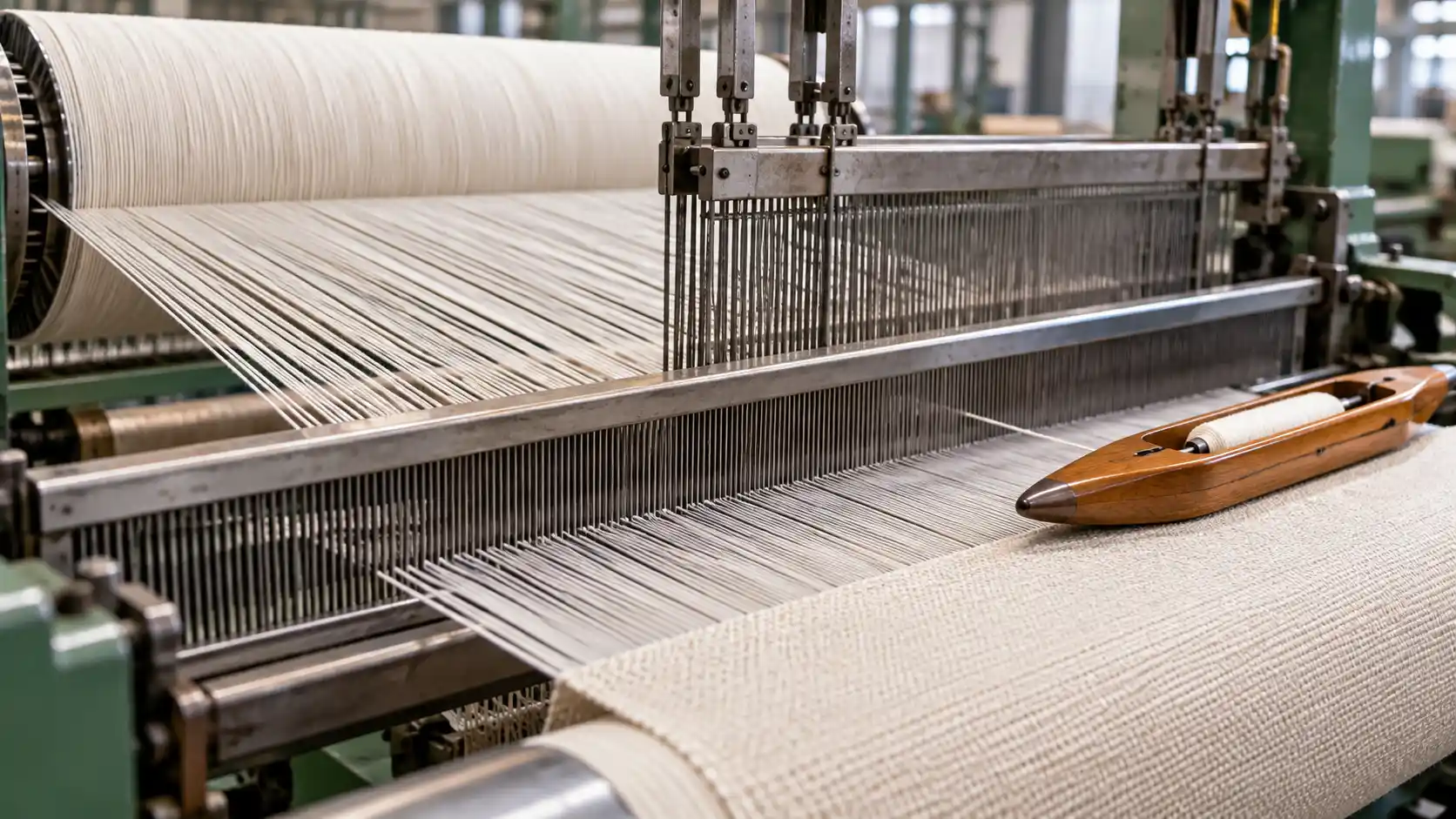
A loom machine is an essential part of textile manufacturing because it converts yarn into woven fabric by interlacing two sets of threads called warp and weft. Warp yarns run lengthwise through the fabric, while weft yarns cross from one side to the other. Their repeated interlacing creates a stable structure used in clothing, denim, upholstery, home textiles, and industrial materials.
Understanding how does a loom machine work helps textile manufacturers, students, production managers, and machinery buyers understand the technology behind fabric production. Traditional shuttle looms and modern rapier, air-jet, and water-jet weaving machines use different methods to insert weft yarn, but they follow the same basic weaving principle.
This guide explains the loom machine working principle, its main components, the weaving process, common loom types, and the factors that influence fabric quality and machine selection.
What Is a Loom Machine?
A loom machine is a mechanical or electronically controlled device that weaves yarn into fabric. It holds warp yarns under controlled tension, creates an opening between selected threads, inserts weft yarn through that opening, and pushes the new thread into position.
Looms are used to manufacture cotton fabrics, denim, polyester materials, towels, curtains, upholstery, technical textiles, and many other woven products.
A textile loom machine may operate manually or use an industrial drive system with electronic controls. Modern machines can include automatic stopping mechanisms, yarn-break sensors, electronic pattern controls, and production monitoring systems.
The final fabric depends on several factors, including yarn type, thread density, weave pattern, machine settings, and production speed.
How Does a Loom Machine Work?
The loom machine working principle involves a repeated sequence of coordinated movements. Three main weaving actions are shedding, picking, and beating-up. Two additional mechanisms, let-off and take-up, regulate warp yarn supply and finished fabric movement.
1. Warp and Weft Preparation
Before weaving begins, warp yarns are arranged in parallel and wound onto a warp beam. The threads are then drawn through heddles and a reed according to the required fabric design.
Weft yarn is supplied separately through a suitable feeding system. Correct yarn preparation, alignment, and tension help reduce thread breakage and weaving defects.
Warp yarn runs lengthwise through the fabric, while weft yarn crosses its width. The interaction between these two yarn systems determines the woven structure.
2. Shedding
Shedding is the process of separating warp yarns into groups to create an opening called the shed.
The loom raises some warp threads and lowers others. This creates enough space for the weft yarn to pass through without becoming trapped.
The shedding mechanism follows the selected weave pattern. Plain weave uses a relatively simple alternating arrangement, while more complex patterns require additional coordinated movements.
3. Picking or Weft Insertion
Picking is the process of inserting weft yarn through the shed.
Different loom designs use different insertion methods. A shuttle loom carries the yarn inside a shuttle, a rapier loom uses a mechanical rapier, and air-jet and water-jet looms use fluid forces to propel suitable yarns across the shed.
The insertion method affects production speed, yarn compatibility, fabric width, energy consumption, and maintenance requirements.
4. Beating-Up
After the weft yarn crosses the shed, the reed moves forward and pushes it against the previously inserted weft. This action is called beating-up.
Beating-up helps maintain the required weft density and keeps the woven structure compact. Incorrect settings may cause uneven fabric density, visible defects, or excessive stress on the yarn.
5. Let-Off and Take-Up
The let-off mechanism releases warp yarn from the warp beam at a controlled rate while maintaining suitable tension.
The take-up mechanism advances the woven fabric and winds it onto a cloth roller.
These systems must work together. Uneven warp tension or inconsistent fabric advancement can lead to variations in fabric density, loose areas, and other quality problems.
6. Repeating the Weaving Cycle
The loom repeats shedding, picking, and beating-up while the let-off and take-up systems regulate yarn supply and fabric collection.
This continuous cycle gradually produces the required fabric length. Modern industrial weaving machines may also use sensors to detect broken threads, monitor operating conditions, and stop automatically when a fault occurs.
How a Loom Turns Yarn Into Fabric
A loom’s weaving process can be understood through five main stages:
- Warp preparation: Warp yarns are arranged in parallel and placed under controlled tension.
- Shedding: Selected warp threads move apart to create an opening.
- Weft insertion: The weft yarn passes through the opening.
- Beating-up: The reed pushes the new weft into the existing fabric.
- Fabric advancement: The woven material moves forward as the loom prepares for the next cycle.
The machine repeats these operations until the required fabric length is produced. Each movement must be synchronized to maintain fabric quality and consistent thread density.
Main Parts of a Loom Machine
Each component contributes to the controlled movement of yarn and the formation of fabric.
| Component | Function |
|---|---|
| Warp beam | Holds the supply of warp yarn |
| Heddles | Control individual warp threads |
| Shafts or harnesses | Raise and lower selected warp threads |
| Shed | Opening created between warp yarn groups |
| Weft insertion system | Carries or propels weft yarn across the shed |
| Reed | Spaces warp threads and beats the weft into position |
| Let-off mechanism | Releases warp yarn at a controlled rate |
| Take-up mechanism | Advances and winds finished fabric |
| Control system | Coordinates movements and monitors operation |
The exact arrangement depends on the loom design. For example, a rapier loom uses a rapier mechanism, whereas an air-jet loom relies on compressed air for weft insertion.
What Is the Difference Between Warp and Weft?
Warp and weft are the two yarn systems that form woven fabric. Their arrangement affects fabric strength, appearance, stability, and performance.
| Feature | Warp Yarn | Weft Yarn |
|---|---|---|
| Direction | Lengthwise | Crosswise |
| Position | Held under controlled tension | Inserted through the shed |
| Preparation | Usually arranged on a warp beam | Supplied through a feeding system |
| Main requirement | Consistent tension and suitable strength | Reliable insertion and suitable yarn properties |
| Function | Forms the lengthwise yarn structure | Interlaces with warp to build the fabric |
Both yarn systems must be suitable for the intended fabric. Fiber type, yarn count, twist, tension, and weave pattern influence the final result.
Types of Industrial Loom Machines
Different weaving technologies serve different production requirements. Choosing an industrial weaving machine depends on the yarn, fabric design, required output, operating budget, and maintenance capabilities.
1. Shuttle Loom
A shuttle loom inserts weft yarn using a shuttle that travels across the shed. The shuttle carries the weft yarn and places it between the warp threads.
Traditional shuttle looms can produce a variety of fabrics. However, the moving shuttle and related mechanical components can limit operating speed and increase noise and maintenance requirements compared with many modern shuttleless machines.
2. Rapier Loom
A rapier loom uses a rigid or flexible rapier to carry weft yarn across the shed. Depending on the design, one rapier transfers the yarn to another, or a single rapier carries it across the fabric width.
Rapier looms are versatile and can handle many yarn types and fabric designs. They are used for apparel fabrics, decorative textiles, and applications requiring flexibility in weft selection.
3. Air-Jet Loom
An air-jet loom uses compressed air to propel weft yarn through the shed. Main nozzles and, where required, relay nozzles help move the yarn across the weaving width.
Air-jet looms can achieve high production speeds for suitable yarns and fabrics. However, compressed-air consumption, machine setup, and yarn compatibility must be considered when evaluating operating costs.
4. Water-Jet Loom
A water-jet loom uses a controlled water stream to carry weft yarn through the shed. It is generally suited to compatible hydrophobic synthetic yarns, including certain polyester and nylon yarns.
Water-jet looms can offer high production speeds for appropriate applications. They are less suitable for absorbent fibers such as cotton, and water management, drying requirements, and corrosion protection need consideration.
Comparison of Common Loom Types
| Loom Type | Weft Insertion Method | Main Advantage | Key Consideration |
|---|---|---|---|
| Shuttle | Physical shuttle | Established weaving method | Speed, noise, and mechanical wear |
| Rapier | Mechanical rapier | Versatile yarn handling | Setup and rapier maintenance |
| Air-jet | Compressed air | High-speed production for suitable materials | Compressed-air costs |
| Water-jet | Water stream | Fast weaving of suitable synthetic yarns | Water compatibility and management |
No single loom is best for every application. A factory producing cotton shirting may have different needs from one manufacturing polyester lining, denim, or technical textiles.
How Is Woven Fabric Produced in a Textile Mill?
Weaving is one stage of the broader textile manufacturing process. Yarn may require preparation before reaching the loom to improve handling and reduce breakage.
- Yarn selection: Choose fiber types and yarn specifications for the intended fabric.
- Warping: Arrange warp yarns in parallel and wind them onto a beam.
- Sizing, when required: Apply a protective coating to suitable warp yarns to improve resistance to abrasion during weaving.
- Drawing-in: Pass warp threads through the heddles and reed according to the design.
- Weaving: Interlace warp and weft yarns using the selected loom.
- Fabric inspection: Check for broken threads, missing picks, uneven density, and other defects.
- Finishing: Apply treatments required for the final product, such as washing, dyeing, heat setting, or surface finishing.
Not every textile follows exactly the same production route. The sequence and treatments depend on the fiber, yarn, fabric design, and intended application.
Weaving is different from spinning and knitting. Spinning converts fibers into yarn, weaving interlaces two yarn systems, and knitting forms fabric through loops. For more background on yarn production, read our guide to ring spinning vs. rotor spinning.
After weaving, many fabrics undergo additional processing to achieve the required appearance, dimensions, and performance. Our guide to stenter machines and textile finishing explains one important stage used in suitable textile finishing lines.
How to Choose the Right Weaving Machine
Selecting an industrial weaving machine requires more than comparing purchase prices or maximum speeds. Manufacturers should evaluate each machine against their actual production requirements.
- Fabric type: Determine whether the machine will produce apparel, denim, home textiles, industrial fabrics, or other materials.
- Yarn compatibility: Confirm that the loom can handle the required fiber types, yarn counts, and yarn characteristics.
- Production capacity: Compare realistic output under expected operating conditions, not only the manufacturer’s maximum rated speed.
- Fabric width: Check the required weaving width and the range of fabrics the machine can accommodate.
- Operating costs: Account for electricity, compressed air or water where applicable, spare parts, maintenance, and labor.
- Automation: Consider electronic controls, automatic stop functions, monitoring systems, and available technical support.
- Supplier reliability: Verify specifications, spare-part availability, warranty terms, installation support, and operator training.
A machine that meets production requirements while maintaining fabric quality and manageable operating costs may provide better long-term value than one selected solely for speed.
Manufacturers considering new or second-hand equipment should also evaluate machine condition, maintenance history, control-system support, and spare-part availability. Our used textile machinery inspection guide explains important checks buyers should complete before investing in used equipment.
For machinery options across weaving, spinning, knitting, dyeing, and finishing, explore our textile machinery solutions to review equipment categories relevant to your production needs.
Frequently Asked Questions
How does a loom machine work?
A loom separates warp yarns to create a shed, inserts weft yarn through the opening, and beats the weft into place. It repeats this sequence while controlling yarn tension and advancing the finished fabric.
What is the difference between a loom and a weaving machine?
The terms are generally interchangeable. A loom is the machine that interlaces warp and weft yarns to produce woven fabric. Weaving machine is another common term, especially in industrial settings.
What are warp and weft in weaving?
Warp yarns run lengthwise and are held under controlled tension. Weft yarns cross the fabric width and interlace with the warp to create the woven structure.
Which loom is best for industrial textile production?
The appropriate loom depends on yarn characteristics, fabric design, production volume, operating costs, and required flexibility. Rapier and air-jet looms suit many applications, while shuttle and water-jet looms serve different requirements.
Can one loom produce different fabric types?
Many looms can produce different fabrics by changing yarn, weave patterns, and machine settings where supported. The machine’s design and capabilities determine which fabrics it can produce efficiently.
Conclusion
A loom machine transforms yarn into fabric through a coordinated sequence of shedding, picking, and beating-up. Warp and weft yarns interlace repeatedly while let-off and take-up mechanisms regulate material movement.
Understanding the loom machine working principle makes it easier to compare shuttle, rapier, air-jet, and water-jet technologies. For textile manufacturers, the right machine depends on fabric requirements, yarn compatibility, production targets, operating costs, and available technical support.
Learning these fundamentals provides a useful starting point for anyone researching weaving technology or evaluating industrial textile equipment.
Explore Mekantra Technologies
For information about machinery sourcing across textile manufacturing processes, visit Mekantra Technologies.

Mekantra Engineering Team
The technical voice of Mekantra. Our team consists of sourcing specialists, mechanical engineers, and logistics experts dedicated to providing transparent insights and high-performance solutions for the global manufacturing sector.
Mekantra Engineering Team
The technical voice of Mekantra. Our team consists of sourcing specialists, mechanical engineers, and logistics experts dedicated to providing transparent insights and high-performance solutions for the global manufacturing sector.