Preventive vs Predictive Maintenance in Industrial Machinery: What’s the Difference?
Summary:
“Preventive and predictive maintenance help industrial facilities reduce equipment failures, but they use different approaches. Learn how schedules and condition monitoring affect maintenance decisions.”
Industrial machinery plays an important role in manufacturing, processing, packaging and production operations. When equipment stops unexpectedly, a facility may face lost production time, repair expenses, delayed orders and safety risks. A suitable maintenance strategy helps manufacturers manage these risks and keep machines operating reliably.
Understanding preventive vs predictive maintenance is important when deciding how and when industrial equipment should be inspected, serviced or repaired. Preventive maintenance follows a planned schedule based on time or usage, while predictive maintenance uses equipment condition data to identify signs of deterioration and estimate when intervention may be needed.
Both approaches aim to reduce unexpected failures, but they rely on different information and planning methods. This guide explains how they work, their advantages and limitations, and how industrial facilities can use them together.
What Is Preventive Maintenance?
Preventive maintenance is a planned approach to servicing equipment at predetermined intervals. Maintenance activities may be scheduled according to operating hours, production cycles, calendar dates or manufacturer recommendations.
The objective is to reduce the likelihood of equipment failure by completing inspections, servicing and component replacement before excessive wear causes a breakdown.
For example, a factory may lubricate machine bearings every month, inspect belts after a set number of operating hours, or replace filters according to a maintenance schedule. These activities can help maintain equipment performance and identify visible problems before they become more serious.
How Scheduled Maintenance Works
A preventive maintenance program usually begins with an equipment inventory and a maintenance schedule. Each machine is assigned tasks according to its design, operating environment, usage and maintenance requirements.
Common preventive maintenance activities include:
- Lubricating bearings, gears and moving components.
- Inspecting belts, chains, couplings and mechanical connections.
- Cleaning filters, cooling systems and machine surfaces.
- Checking electrical connections and safety devices.
- Replacing consumable parts at specified intervals.
- Testing equipment functions and recording inspection results.
Maintenance teams document completed work and record recurring problems. These records help managers adjust service intervals and identify machines that require closer attention.
Preventive maintenance is especially useful when equipment manufacturers specify clear service intervals or when the consequences of failure make regular inspection essential.
Advantages of Preventive Maintenance
Preventive maintenance provides several practical benefits for industrial facilities.
Predictable maintenance planning: Scheduled work can be arranged around production shifts, planned shutdowns and equipment availability.
Reduced failure risk: Regular inspections and servicing can identify worn parts, poor lubrication and other common problems before they lead to failure.
Simpler implementation: Many preventive tasks require basic tools, trained technicians and a clear maintenance checklist rather than continuous monitoring technology.
Better maintenance records: Consistent service logs help teams track repairs, recurring faults and equipment condition over time.
Limitations of Preventive Maintenance
Preventive maintenance does not eliminate all equipment failures. A component may fail between scheduled inspections, especially if operating conditions change unexpectedly.
Fixed schedules can also lead to unnecessary work. A component might be replaced even when it remains in good condition, increasing labor costs and consuming spare parts.
On the other hand, an interval that is too long may allow deterioration to continue unnoticed. Maintenance schedules should therefore reflect manufacturer guidance, actual usage, operating conditions and historical failure patterns.
What Is Predictive Maintenance?
Predictive maintenance uses equipment condition data to identify developing problems and determine when maintenance is likely to be needed. Instead of relying only on a fixed calendar schedule, it monitors indicators that reveal changes in machine performance or component condition.
This approach may use vibration analysis, temperature monitoring, oil analysis, acoustic measurements and sensors connected to monitoring software.
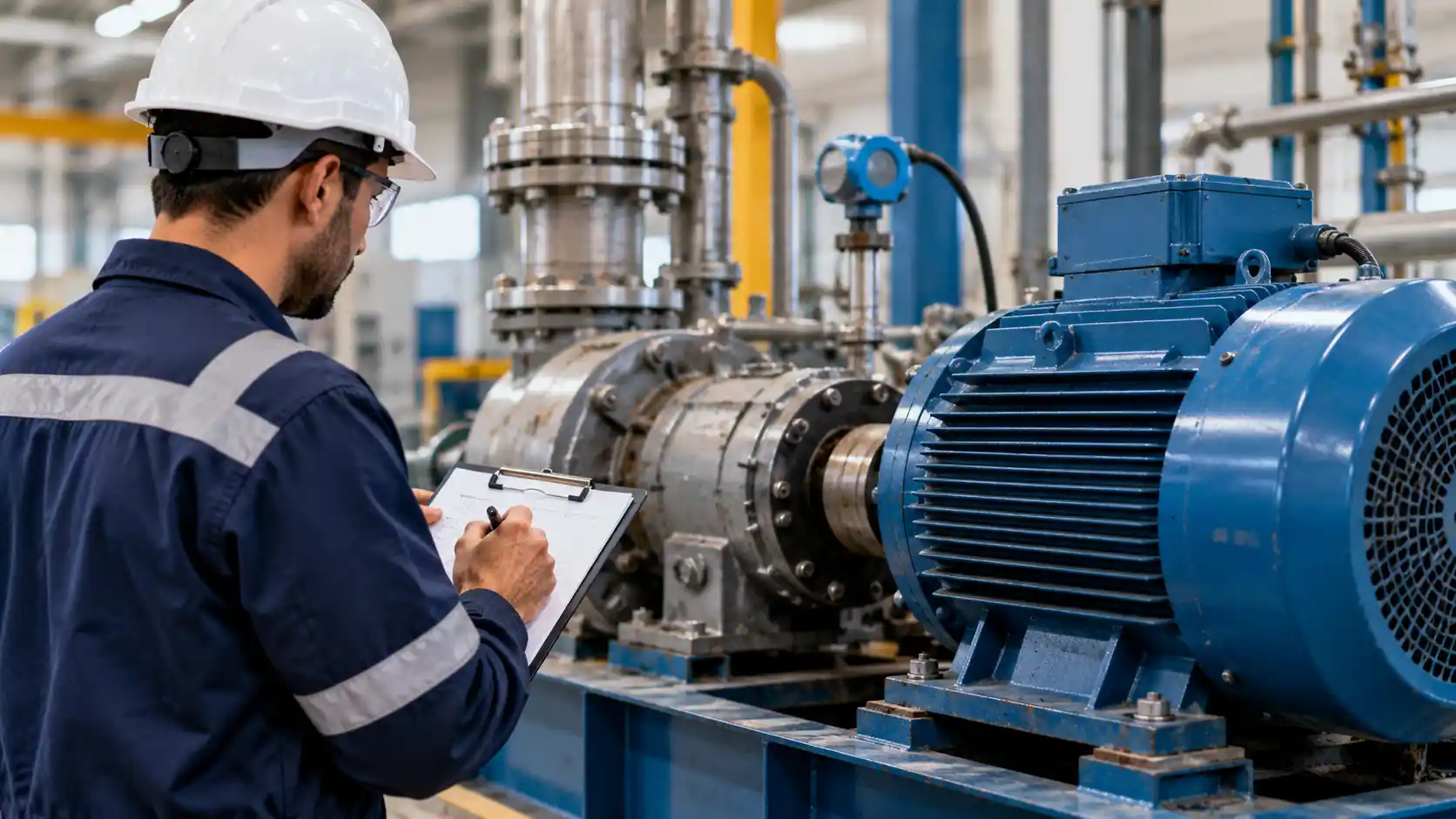
For example, unusual vibration in a motor or bearing may indicate imbalance, misalignment or developing mechanical wear. A maintenance team can investigate the cause and plan corrective work before the problem leads to an unexpected shutdown.
Predictive maintenance is often most valuable for critical equipment where failures are expensive, operating conditions vary or continuous monitoring can provide useful early warnings.
How Condition-Based Monitoring Works
Condition-based monitoring involves collecting and reviewing information about the actual state of a machine. Predictive maintenance uses this information, along with trends and diagnostic methods, to estimate when intervention may be required.
Common monitoring techniques include:
Vibration monitoring: Sensors or handheld instruments measure vibration patterns in motors, pumps, fans, gearboxes and bearings. Changes may indicate imbalance, misalignment, looseness or bearing deterioration.
Temperature monitoring: Infrared cameras, thermal sensors or contact instruments identify unusual heat in motors, bearings, electrical connections and other components. Elevated temperatures can indicate friction, overload or cooling problems.
Oil analysis: Lubricant samples are tested for contamination, viscosity changes and wear particles. Results can help reveal internal wear, lubricant degradation or contamination before a component fails.
Sensor-based monitoring: Sensors collect information such as vibration, temperature, pressure, speed or current. Connected monitoring systems can display trends and generate alerts when readings move outside defined limits.
The usefulness of predictive maintenance depends on data quality, suitable thresholds, correct interpretation and a clear process for responding to alerts. A sensor alone does not guarantee an accurate prediction.
Advantages of Predictive Maintenance
Predictive maintenance can help industrial facilities make more informed decisions about repairs and equipment servicing.
Maintenance based on actual condition: Teams can investigate machines that show signs of deterioration rather than relying only on fixed service intervals.
Earlier fault detection: Monitoring may reveal developing mechanical or electrical problems before they cause a major breakdown.
More targeted repairs: Condition data helps maintenance teams focus attention on components that need investigation or intervention.
Improved planning: When deterioration is detected early enough, technicians may be able to schedule repairs, arrange spare parts and coordinate work with production.
Limitations of Predictive Maintenance
Predictive maintenance may require sensors, diagnostic instruments, software, specialist training and reliable data management. These requirements can increase initial and ongoing costs.
It also requires people who can interpret monitoring results correctly. Poor sensor placement, unsuitable alarm thresholds or inaccurate readings can create false alarms or missed warnings.
Predictive maintenance is not necessary for every machine. A simple, inexpensive component may be easier and more economical to maintain through regular inspection or scheduled replacement.
Preventive vs Predictive Maintenance: Key Differences
The main difference is how maintenance decisions are triggered. Preventive maintenance follows a predetermined schedule, while predictive maintenance uses condition information to help determine when intervention is appropriate.
| Comparison factor | Preventive Maintenance | Predictive Maintenance |
|---|---|---|
| Main approach | Time- or usage-based servicing | Condition-based decisions |
| Maintenance trigger | Scheduled interval or operating hours | Condition readings, trends or diagnostic findings |
| Monitoring needs | Inspections and routine checks | Sensors, instruments or condition monitoring |
| Initial investment | Often lower | Can be higher |
| Planning | Tasks planned in advance | Repairs planned using condition information |
| Unexpected failures | Can reduce risk but cannot eliminate failures | Can identify some developing faults before failure |
| Unnecessary servicing | Possible when parts are replaced too early | May reduce unnecessary work when data is reliable |
| Skills required | Maintenance and inspection skills | Maintenance skills plus monitoring and diagnostic knowledge |
| Suitable applications | Equipment with clear service intervals | Critical or condition-sensitive equipment |
| Main limitation | Fixed intervals may not reflect actual condition | Monitoring costs and data interpretation requirements |
Neither strategy is universally better. The right choice depends on equipment value, failure consequences, maintenance costs, operating conditions and the availability of useful monitoring data.
Planned Downtime vs Unexpected Breakdowns
Downtime is the period when equipment is unavailable for production. It may be planned for inspection or repairs, or unplanned because a machine fails unexpectedly.
Planned downtime allows a facility to arrange technicians, spare parts, production schedules and safety procedures in advance. Preventive maintenance supports this process by establishing routine service intervals. Predictive maintenance can help teams schedule corrective work when monitoring indicates that a component requires attention.
Unexpected breakdowns are harder to manage. A failed motor, damaged bearing or overheated gearbox may interrupt an entire production line if replacement equipment or spare parts are unavailable.
However, planned maintenance also stops equipment temporarily, and predictive alerts do not always provide enough warning to avoid an interruption. Facilities should consider the effect of each machine on the wider production process when deciding how much maintenance attention it requires.
When Should You Use Each Maintenance Strategy?
The choice between preventive and predictive maintenance should reflect the machine’s role, failure history, operating environment and maintenance budget.
Use Preventive Maintenance When
- The manufacturer provides clear service intervals.
- Routine lubrication, cleaning and inspection are essential.
- Equipment is relatively simple and inexpensive to maintain.
- Monitoring technology would cost more than the potential benefit.
- A facility needs a consistent maintenance checklist for many machines.
For example, regularly cleaning a filter or lubricating a component at its recommended interval may be a straightforward preventive task.
Use Predictive Maintenance When
- Equipment failure could stop a critical production line.
- Components show measurable signs of deterioration before failure.
- Monitoring data can help identify problems early.
- Repairs require specialist labor or long-lead-time spare parts.
- The cost of monitoring is justified by the potential reduction in failure-related losses.
For example, monitoring vibration in a critical industrial pump may help a maintenance team investigate bearing deterioration before a more serious failure develops.
Can Preventive and Predictive Maintenance Work Together?
Yes. Many industrial facilities benefit from combining both approaches instead of relying on only one.
A combined maintenance program can use preventive maintenance for routine servicing and predictive maintenance for selected high-risk or critical equipment.
For example, a factory may follow the manufacturer’s lubrication schedule for its motors while also monitoring vibration on motors that drive essential production equipment. Scheduled inspections remain in place, while condition data helps the team identify additional work when needed.
A practical combined strategy includes the following steps:
- Identify critical equipment: Assess which machines could cause major production losses or safety concerns if they fail.
- Establish preventive schedules: Use manufacturer recommendations, operating conditions and maintenance history to plan routine servicing.
- Select suitable monitoring methods: Apply vibration, temperature or oil analysis where measurable condition changes can provide useful information.
- Set alert and response procedures: Define who reviews alerts, investigates abnormalities and approves repairs.
- Review maintenance results: Track failures, downtime, repair costs and recurring problems to improve the program.
The objective is not to install monitoring technology on every machine. It is to use the right maintenance method for each asset and ensure that maintenance resources are directed toward the most important risks.
How to Build an Effective Industrial Machinery Maintenance Plan
A useful maintenance plan should be practical, documented and regularly reviewed. It should also account for the manufacturer’s requirements and the operating conditions of each machine.
Start by listing the equipment, its location, operating hours, critical components and maintenance history. Assign routine inspection and servicing tasks, then identify machines where condition monitoring could provide additional value.
Record completed maintenance, parts replaced, faults detected and time lost to breakdowns. These records help managers identify repeated problems and determine whether service intervals or monitoring methods need adjustment.
For facilities managing complex production equipment, suitable mechanical machinery solutions should be considered alongside maintenance requirements, spare-part availability and technical support.
A maintenance plan should also define safe shutdown procedures, technician responsibilities and the steps required before machinery is returned to service. Maintenance work must follow applicable safety procedures and equipment-specific instructions.
Frequently Asked Questions
What is the main difference between preventive and predictive maintenance?
Preventive maintenance is performed according to a predetermined schedule or usage interval. Predictive maintenance uses equipment condition data to identify developing problems and help determine when maintenance is needed.
Is predictive maintenance better than preventive maintenance?
Not in every situation. Predictive maintenance can be valuable for critical equipment when reliable condition data is available. Preventive maintenance may be more practical for simple machinery with clear service intervals and low monitoring requirements.
What is condition-based maintenance?
Condition-based maintenance is triggered by the observed condition of equipment rather than only by a fixed schedule. Predictive maintenance can use condition monitoring and trend analysis to estimate when maintenance may be required.
How often should industrial machinery be maintained?
Maintenance frequency depends on manufacturer recommendations, operating hours, workload, environmental conditions, equipment criticality and maintenance history. There is no single interval suitable for every industrial machine.
Can preventive and predictive maintenance be used together?
Yes. Facilities can use preventive maintenance for routine inspections and servicing while applying predictive monitoring to critical equipment where early fault detection can provide meaningful benefits.
Conclusion
Preventive and predictive maintenance both help industrial facilities manage equipment reliability, but they use different methods to decide when work should be performed. Preventive maintenance follows planned intervals, while predictive maintenance relies on condition information to identify developing problems and guide maintenance decisions.
For many manufacturers, a combination of both approaches provides a practical balance. Routine servicing maintains basic equipment care, while condition monitoring can provide additional insight into critical machinery. The most suitable strategy depends on equipment requirements, failure risks, available skills, monitoring costs and production priorities.
A well-organized maintenance program helps teams plan work, investigate recurring faults and make informed decisions about machinery reliability and operating costs.
Explore Mekantra Technologies
Learn more about industrial equipment and machinery options at Mekantra Technologies.

Mekantra Engineering Team
The technical voice of Mekantra. Our team consists of sourcing specialists, mechanical engineers, and logistics experts dedicated to providing transparent insights and high-performance solutions for the global manufacturing sector.
Mekantra Engineering Team
The technical voice of Mekantra. Our team consists of sourcing specialists, mechanical engineers, and logistics experts dedicated to providing transparent insights and high-performance solutions for the global manufacturing sector.